
Operation CargoTalon: Targeted Cyber-Espionage Against Russia's Aerospace Sector with EAGLET Malware
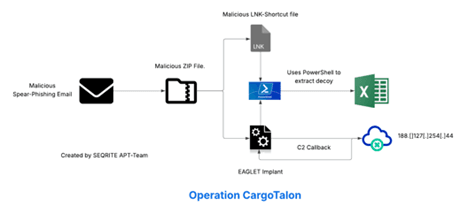
Operation CargoTalon represents a significant cyber-espionage campaign targeting Russia's aerospace and defense sectors, specifically the Voronezh Aircraft Production Association (VASO). The operation employs the EAGLET malware, delivered via malicious TTN (Tovarno-Transportnaya Nakladnaya) documents, which are typically used in logistics and shipping. This targeted approach underscores the sophistication and precision of modern cyber-espionage campaigns. Technically, the operation likely begins with phishing emails containing malicious TTN documents. Upon opening, these documents execute the EAGLET malware, which is designed for data exfiltration. While specific details about EAGLET's capabilities are not provided, it is reasonable to assume it includes features such as keylogging, screen capturing, and file theft, common in advanced malware used for espionage. The impact on the cybersecurity landscape is substantial. This operation highlights the persistent threat to critical infrastructure sectors, emphasizing the need for robust cybersecurity measures. For cybersecurity professionals, this incident underscores the importance of vigilance in monitoring and detecting malicious documents, enhancing endpoint protection, and conducting regular security audits. From an expert perspective, Operation CargoTalon exemplifies the evolving tactics of cyber-espionage. The use of TTN documents is particularly noteworthy, as it leverages seemingly legitimate business documents to deliver malware. This tactic can bypass traditional security measures that focus on more obvious malicious attachments. Actionable intelligence from this operation includes educating employees about the risks of opening unexpected documents, implementing advanced threat detection systems, and regularly updating and patching systems to prevent exploitation of known vulnerabilities. Additionally, organizations should consider implementing network segmentation and strict access controls to limit the spread of malware and the exfiltration of sensitive data.