
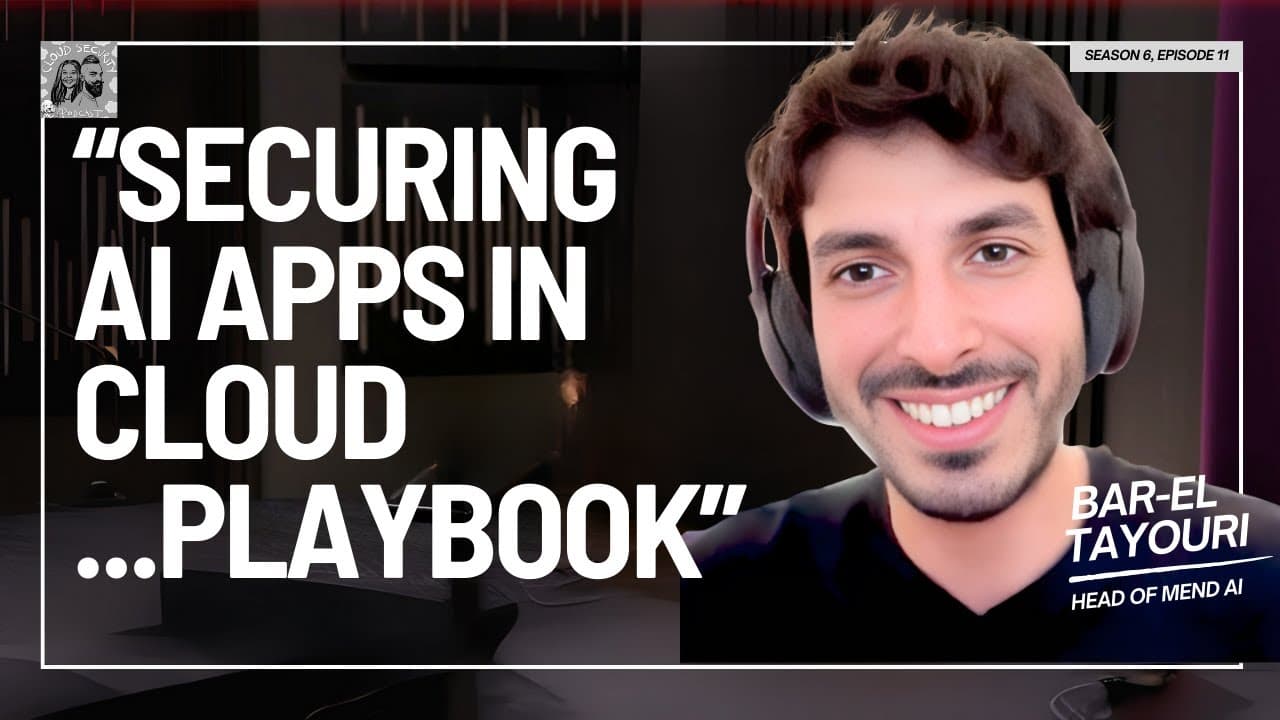
New Cloud Security Podcast Video: Expert Discusses AI Application Security
In the latest video from the Cloud Security Podcast, guest expert Barel discusses the challenges and strategies for securing AI-based applications in the cloud. The conversation covers crucial aspects, including the components of AI applications, associated risks, and best practices for ensuring security. Barel begins by explaining the concept of an "AI BOM" (Bill of Materials), which is a list of AI components used in an application. He compares this to a traditional SBOM (Software Bill of Materials), which lists packages and their dependencies. AI components can include open-source models, remote models via inference providers, and datasets used to train the models. Barel emphasizes the importance of maintaining an inventory of these components to identify compliance and security risks. A key point in the discussion is the distinction between different layers of an AI application. Barel uses the analogy of the OSI model in networking to explain the layers of an AI application, which include the base model, "rug" (Retrieval-Augmented Generation) layers, and agents that interact with data and execute actions. This structure helps better understand the components and risks associated with each layer. The conversation also addresses the different stages of AI adoption in organizations, from experimentation to production and optimization. Barel notes that developers often start with simple use cases using open-source models or providers like OpenAI or Bedrock, then evolve to more complex models and "rug" agents. He stresses the importance of integrating AI security tools from the early stages of experimentation to avoid production issues. Another crucial aspect discussed is the security of AI models themselves. Barel explains the differences between generative models and embedding models, and how these models are used in "rug" applications. He warns about the risks of bias, malicious intent, and data leaks, and emphasizes the importance of dynamically testing models to identify these vulnerabilities. The discussion then turns to security strategies for AI applications in production. Barel recommends starting by eliminating "Shadow AI," which refers to undocumented uses of AI within the organization. He suggests detecting risks at the component level, conducting red team testing, and creating policies to manage these risks. He highlights the importance of automation and integrating security tools into the CI/CD pipeline to ensure continuous security. Finally, Barel shares his thoughts on the future of AI security. He predicts that developers and product teams will need to be more aware of AI application behaviors and integrate security testing from the early stages of development. He emphasizes the importance of innovation and adapting security tools to keep up with the rapid evolution of AI technologies. In conclusion, Barel shares some personal anecdotes, including his love for playing the piano and his pride in being a father of two. He also mentions his fondness for Ethiopian cuisine, particularly vegetarian dishes. To learn more about Barel and his work at Menlo Security, you can follow him on Twitter and LinkedIn, where he regularly shares content on AI security. You can also visit the Menlo Security website for more information on their AI application security solutions.