
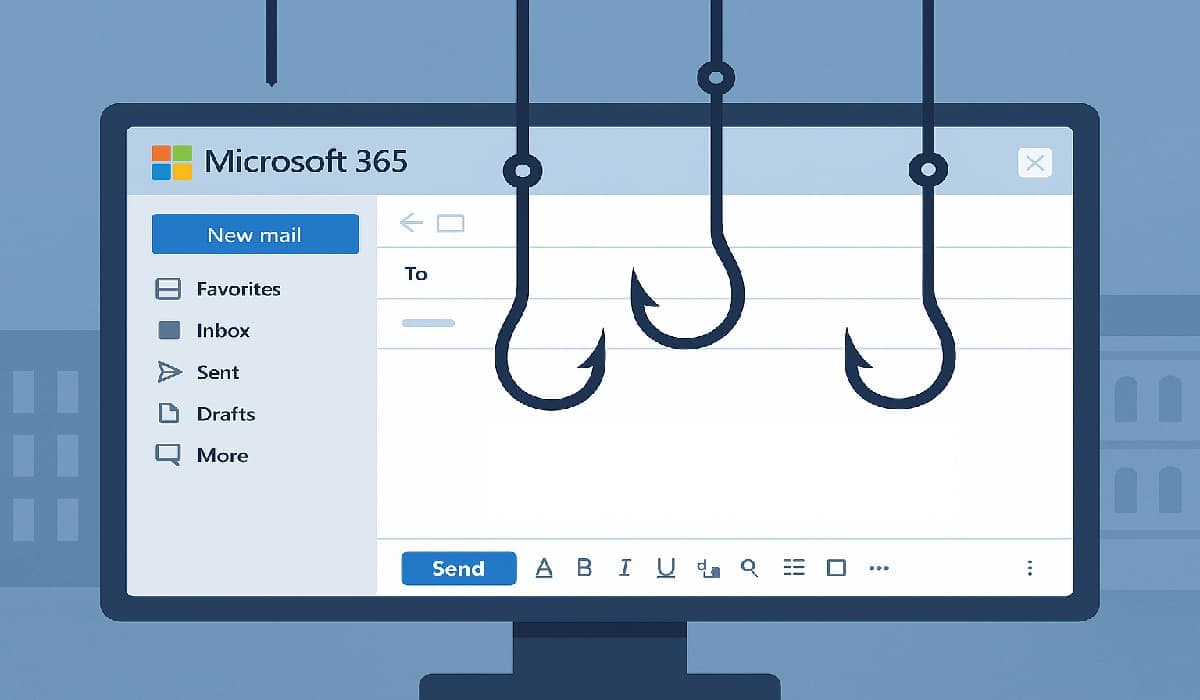
Attackers Exploit Microsoft 365's Direct Send for Internal Phishing Campaigns
A recent report by Proofpoint reveals that attackers are leveraging Microsoft 365's Direct Send feature and unsecured SMTP relays to conduct internal phishing campaigns. This technique allows malicious actors to bypass traditional security filters by sending emails that appear to originate from legitimate internal sources. Technically, Microsoft 365's Direct Send enables applications to send emails directly to internal recipients without traversing standard email routing protocols. When combined with unsecured SMTP relays, attackers can craft and deliver phishing emails that seem to come from within the organization. This method exploits the inherent trust employees place in internal communications, thereby increasing the likelihood of successful phishing attacks. The implications of this attack vector are significant. Internal emails are typically perceived as more trustworthy than external ones, making them an effective tool for social engineering attacks. This can lead to compromised credentials, data breaches, and further infiltration into the organization's network. From a cybersecurity perspective, this underscores the necessity for robust internal email monitoring and authentication mechanisms. Organizations should implement and enforce email authentication protocols such as SPF, DKIM, and DMARC to verify the legitimacy of internal emails. Additionally, continuous monitoring of internal email traffic for anomalous patterns and regular employee training on recognizing phishing attempts, even from internal sources, are crucial steps in mitigating this risk. Moreover, securing SMTP relays to prevent unauthorized access and use is essential. Organizations must ensure that their email infrastructure is configured to detect and block suspicious internal emails, thereby reducing the attack surface available to malicious actors. In conclusion, the exploitation of Microsoft 365's Direct Send and unsecured SMTP relays for internal phishing represents a sophisticated and concerning development in the cybersecurity landscape. It highlights the need for comprehensive email security strategies that encompass both external and internal threats.