
ClickFix Malware Campaign Exploits CAPTCHAs for Multi-Platform Infections
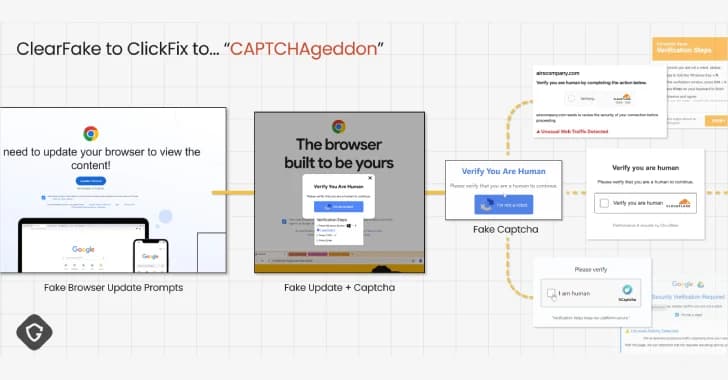
The ClickFix malware campaign has seen rapid propagation over the past year, according to recent findings by Guardio Labs. This social engineering tactic combines various propagation methods, sophisticated narratives, and evasion techniques, allowing it to surpass the notorious browser update scam. Notably, ClickFix exploits CAPTCHAs to distribute multi-platform infections, marking a significant evolution in malware delivery tactics. Technically, the exploitation of CAPTCHAs is particularly concerning. CAPTCHAs are typically used as a security measure to differentiate human users from automated bots. However, ClickFix subverts this mechanism to facilitate malware distribution. This approach not only evades traditional detection methods but also leverages the inherent trust users place in CAPTCHAs as a security feature. The multi-platform capability of ClickFix further amplifies its threat potential, as it can infect a wide range of devices and operating systems. The impact of ClickFix on the cybersecurity landscape is substantial. Its rapid spread and sophisticated tactics indicate that conventional security measures may be inadequate against such advanced threats. The campaign's success underscores the need for continuous innovation in security protocols and heightened user awareness. Organizations must remain vigilant, updating their security software and patching systems against known vulnerabilities. From an expert perspective, the ClickFix campaign highlights several critical points. First, the exploitation of CAPTCHAs demonstrates the adaptability and creativity of threat actors. Security teams must now consider CAPTCHAs as potential vectors for malware delivery. Second, the multi-platform nature of the malware necessitates a comprehensive defense strategy that covers all potential entry points. Lastly, user education is paramount. Employees must be trained to recognize and report suspicious activities, particularly those involving CAPTCHAs from untrusted sources. Actionable intelligence includes updating security software and ensuring all systems are patched against known vulnerabilities. Implementing user training programs to educate employees about the risks of social engineering attacks and the novel use of CAPTCHAs in malware campaigns is crucial. Additionally, monitoring network traffic for signs of ClickFix activity, such as unusual CAPTCHA-related traffic or multi-platform infection patterns, is essential. Developing and testing incident response plans will ensure readiness in case of an infection. In conclusion, the ClickFix malware campaign represents a significant evolution in malware delivery tactics. Its exploitation of CAPTCHAs and multi-platform capabilities pose substantial challenges to traditional security measures. Organizations must adapt their defenses and educate users to mitigate the risks posed by this sophisticated threat.