
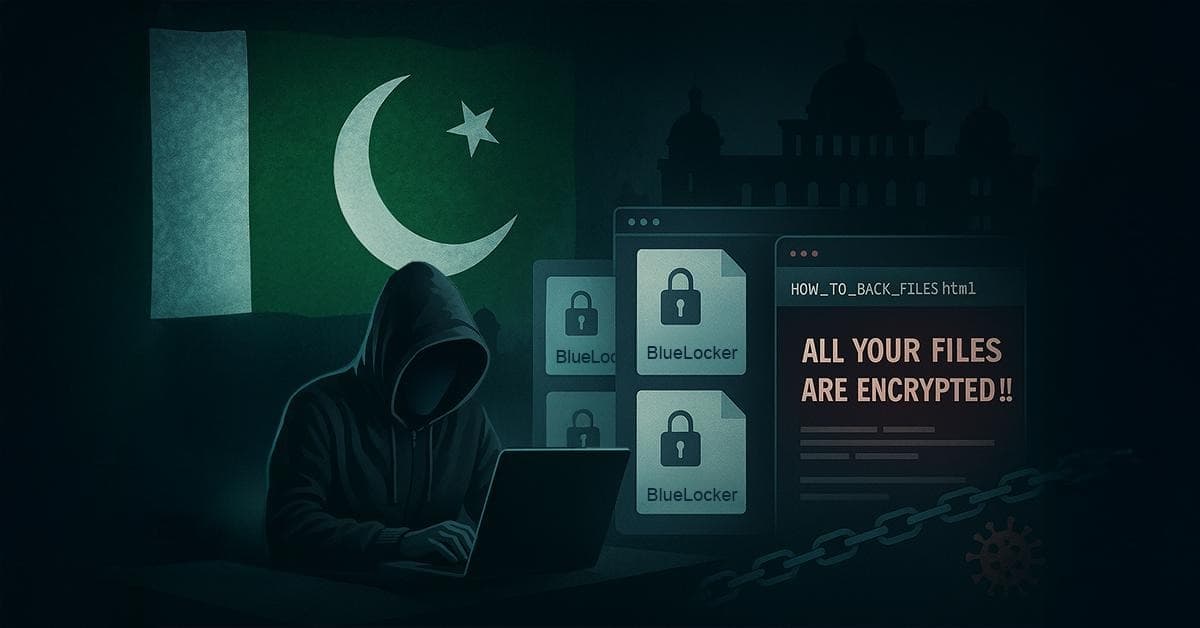
Blue Locker Ransomware Strikes Pakistan's Oil and Gas Sector: NCERT Issues Critical Warning
The Blue Locker ransomware has recently targeted Pakistan's oil and gas sector, causing significant operational disruptions and financial losses. Pakistan's National Cyber Emergency Response Team (NCERT) has issued a critical warning to 39 key ministries and institutions about the ongoing threat. While specific technical details about the ransomware are not disclosed, the severity of the attack and the broad warning indicate a serious and coordinated cyber threat. Ransomware attacks on critical infrastructure, such as the oil and gas sector, pose severe risks. These sectors are vital to national economies and public safety, making them attractive targets for cybercriminals. The operational disruptions caused by Blue Locker can lead to substantial economic losses and potential safety hazards. The financial impact is compounded by the ransom demands and the cost of recovery efforts. The warning from NCERT highlights the importance of robust cybersecurity measures. Organizations should ensure they have comprehensive backup and disaster recovery plans in place. Regular security audits and vulnerability assessments are crucial to identify and mitigate potential entry points for ransomware. Employee training is also essential, as phishing emails remain a common initial attack vector for ransomware. The broader cybersecurity landscape is witnessing an increase in targeted ransomware attacks. These attacks are becoming more sophisticated, with threat actors employing advanced techniques to evade detection and maximize impact. The Blue Locker attack underscores the need for continuous monitoring and threat intelligence sharing among critical infrastructure sectors. In conclusion, the Blue Locker ransomware attack on Pakistan's oil and gas sector is a stark reminder of the evolving threat landscape. Organizations must prioritize cybersecurity measures, including proactive threat hunting, regular security updates, and employee awareness programs, to mitigate the risk of such attacks.