
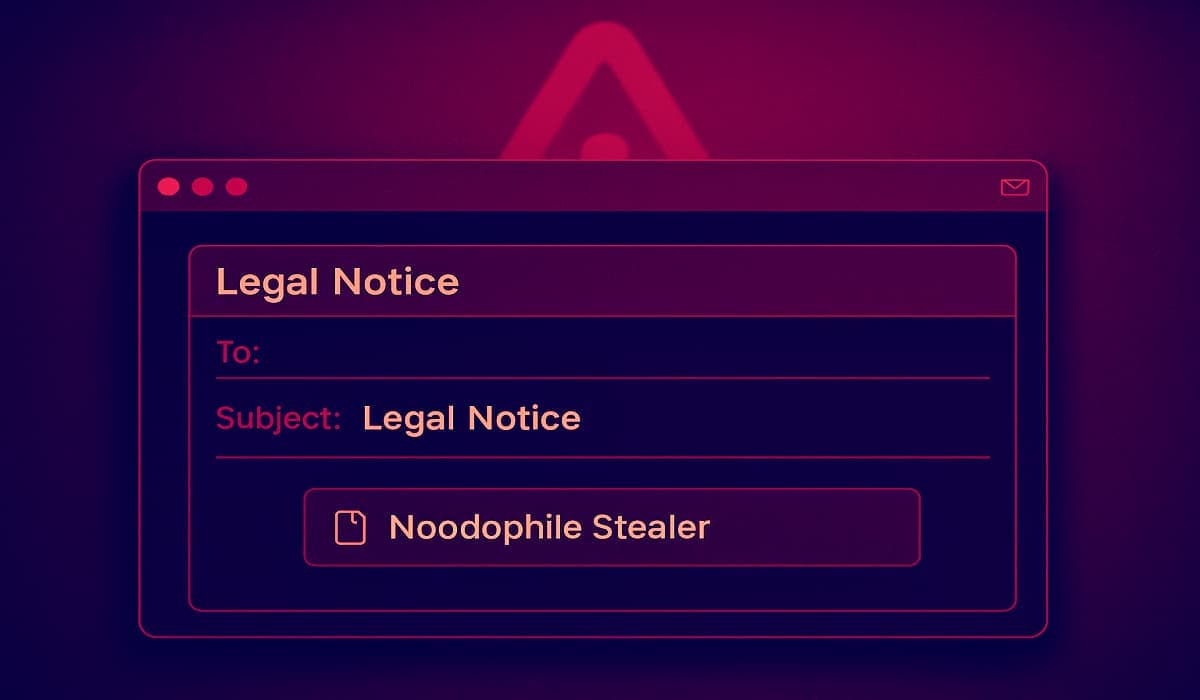
New Noodlophile Stealer Variant Spreads via Sophisticated Phishing Emails
Morphisec has issued a warning about the propagation of a new variant of the Noodlophile Stealer through phishing emails masquerading as copyright notifications. These deceptive emails contain Dropbox links that, when accessed, initiate the download of the malware. The Noodlophile Stealer is an infostealer designed to pilfer sensitive information, including passwords, cookies, and cryptocurrency data. The incorporation of Dropbox links in these phishing emails enhances their credibility, complicating users' ability to discern their malicious nature. The technical ramifications of this attack are substantial. The malware is engineered to exfiltrate sensitive data, potentially leading to further compromises such as unauthorized account access and financial loss. The utilization of legitimate services like Dropbox to host malicious content underscores the evolving tactics of cybercriminals to circumvent traditional security measures. The impact on the cybersecurity landscape is profound, emphasizing the necessity for advanced threat detection and user education. Organizations should deploy robust email filtering solutions to identify and block phishing emails. Endpoint protection solutions capable of detecting and blocking malware downloads are also essential. Moreover, user training programs should stress the risks associated with clicking on links in unsolicited emails, even if they seem to originate from legitimate sources. This attack serves as a reminder of the importance of multi-layered security strategies to counter increasingly sophisticated phishing campaigns. For cybersecurity professionals, this incident highlights the need for continuous vigilance and adaptation to emerging threats. Implementing threat intelligence services can provide timely information about new threats, enabling organizations to adjust their security posture proactively. Additionally, regular security audits and penetration testing can help identify and mitigate vulnerabilities that could be exploited by such attacks.