
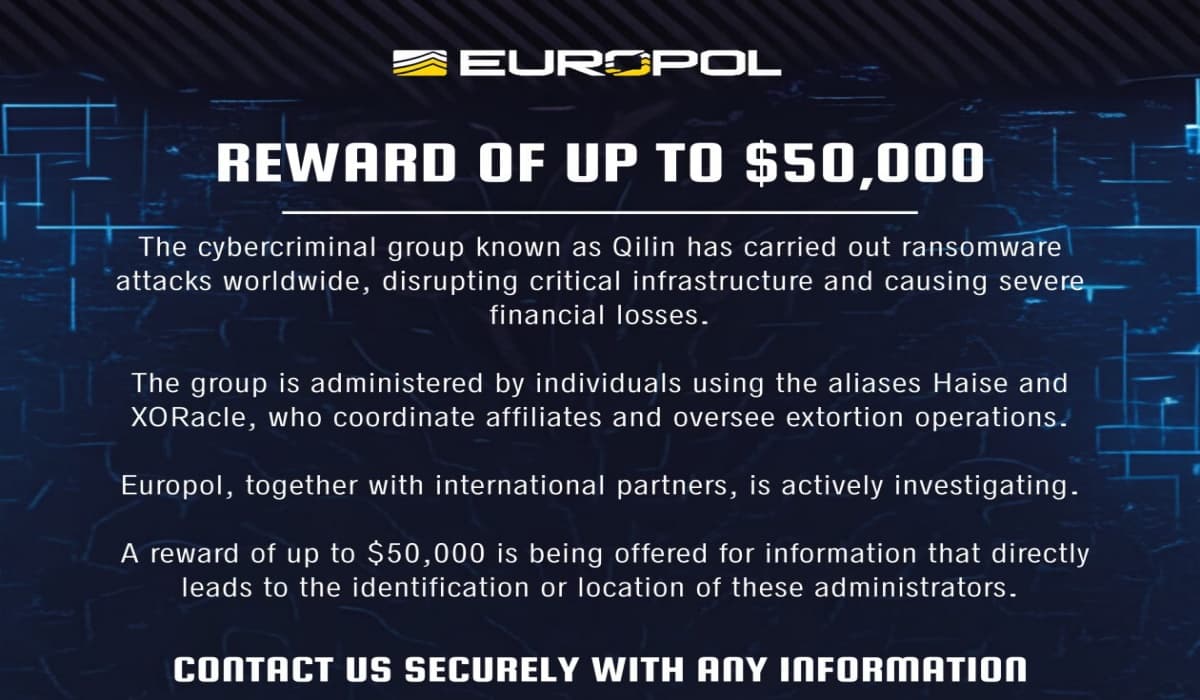
Europol Confirms Qilin Ransomware Reward is a Scam
Europol has confirmed that a widely reported $50,000 reward for information on the Qilin ransomware group is a scam. This announcement follows reports of a reward being offered for information leading to the dismantling of the Qilin group, known for its ransomware attacks. Europol clarified that this reward is not legitimate and warned against this fraud attempt.
The Qilin ransomware group has been active in targeting organizations with sophisticated ransomware attacks. The idea of a reward for information on such groups is not uncommon, as law enforcement agencies often offer rewards to encourage tips that can lead to arrests or dismantling of criminal operations. However, in this case, the reward is a scam, highlighting the need for verification of such offers.
This incident underscores the importance of verifying the legitimacy of information sources in cybersecurity. Scams like this can undermine trust in law enforcement and other official channels. They can also distract from legitimate efforts to combat ransomware groups. Cybersecurity professionals must remain vigilant and verify the authenticity of any rewards or offers related to cybercrime.
From a technical perspective, this scam demonstrates the need for robust verification processes. It's not just about technical defenses but also about ensuring that the information we act on is accurate and legitimate. This is particularly important in the fight against ransomware, where timely and accurate information can be crucial.
For actionable intelligence, cybersecurity professionals should always verify the source of any rewards or offers related to cybercrime. They should rely on official channels and verified sources for information. Additionally, they should be aware of the tactics used by scammers and be prepared to identify and report such scams.
In conclusion, the confirmation by Europol that the reward for information on the Qilin ransomware group is a scam serves as a reminder of the importance of verification and vigilance in cybersecurity. It highlights the need for robust processes to ensure the accuracy and legitimacy of information, and the importance of relying on official channels for such information.