
INTERPOL's Operation Serengeti 2.0: A Major Blow to Cybercrime in Africa
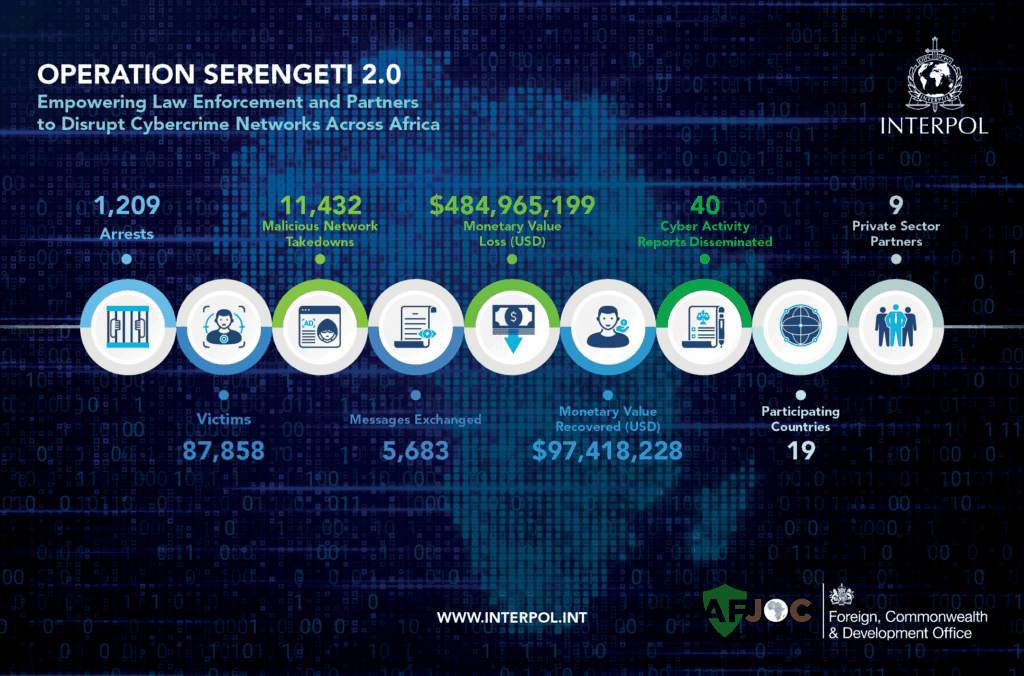
INTERPOL's Operation Serengeti 2.0, conducted from June to August 2025, represents a significant achievement in the fight against cybercrime in Africa. The operation resulted in the arrest of 1,209 cybercriminals across 18 African countries and the seizure of $97.4 million. Additionally, it dismantled 11,432 malicious infrastructures and assisted 88,000 victims. This large-scale effort underscores the growing threat of cybercrime in the region and the importance of international collaboration in combating it. Technically, the operation targeted a wide range of cybercriminal activities, including the dismantling of malicious infrastructures such as command-and-control servers, phishing sites, and other malicious online assets. The scale of the operation suggests that these cybercriminals were operating sophisticated networks, capable of causing significant financial and operational damage. The seizure of $97.4 million indicates the substantial financial gains these criminals were amassing, highlighting the profitability of cybercrime in the region. The impact on the cybersecurity landscape is profound. This operation demonstrates that cybercrime in Africa is not only prevalent but also highly organized. The collaboration between INTERPOL and African nations is a positive development, showing that international cooperation can yield significant results. However, it also indicates that cybercrime is rampant in Africa, and more such operations may be needed to curb this growing threat. From an expert perspective, Operation Serengeti 2.0 is a significant win for cybersecurity efforts in Africa. It shows that with the right resources and collaboration, law enforcement can effectively disrupt cybercriminal networks. However, the sheer scale of the operation also highlights the magnitude of the problem. Cybercriminals in Africa are well-organized and capable of large-scale operations, which means that continuous efforts and international cooperation are essential to combat this threat effectively. In conclusion, Operation Serengeti 2.0 is a major blow to cybercrime in Africa. It demonstrates the importance of international collaboration and the need for sustained efforts to combat cybercrime. The operation's success provides valuable insights into the scale and sophistication of cybercriminal networks in the region and underscores the need for ongoing vigilance and cooperation among law enforcement agencies worldwide.