
Lazarus Group Expands Malware Arsenal with Multi-platform Threats Targeting DeFi Sector
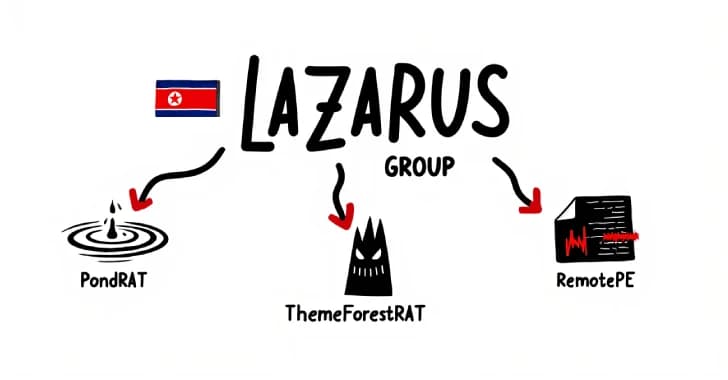
The Lazarus Group, a notorious North Korean threat actor, has been linked to a sophisticated social engineering campaign distributing three types of multi-platform malware: PondRAT, ThemeForestRAT, and RemotePE. This campaign, observed by NCC Group's Fox-IT in 2024, targeted a decentralized finance (DeFi) organization, resulting in its compromise. The use of multi-platform malware indicates that the Lazarus Group is adapting to the diverse IT environments of their targets. PondRAT and ThemeForestRAT are likely Remote Access Trojans (RATs) that provide the attackers with remote control over infected systems. RemotePE suggests a tool capable of executing Portable Executable (PE) files remotely, potentially allowing for further payload delivery and execution. The technical implications of this campaign are significant. Multi-platform malware complicates detection and mitigation efforts, as security teams must ensure coverage across various operating systems. The targeting of a DeFi organization underscores the financial motivations behind such attacks, given the high-value assets managed within the DeFi sector. From a broader cybersecurity perspective, this campaign highlights the increasing sophistication of threat actors. The Lazarus Group's ability to develop and deploy multi-platform malware demonstrates their advanced capabilities and adaptability. This evolution necessitates a proactive approach to cybersecurity, including the implementation of robust endpoint detection and response (EDR) solutions, regular user training on social engineering tactics, and network segmentation to limit the spread of malware. For cybersecurity professionals, actionable intelligence includes monitoring for indicators of compromise (IOCs) related to the identified malware strains. Sharing threat intelligence within the DeFi sector and beyond can enhance collective defense mechanisms. Organizations should also prioritize patch management and vulnerability assessments to reduce the attack surface. In conclusion, the Lazarus Group's latest campaign underscores the need for continuous vigilance and adaptation in cybersecurity practices. By leveraging multi-platform malware and sophisticated social engineering techniques, threat actors are raising the stakes for defenders. Cybersecurity professionals must stay informed about emerging threats and employ comprehensive security strategies to mitigate risks effectively.