
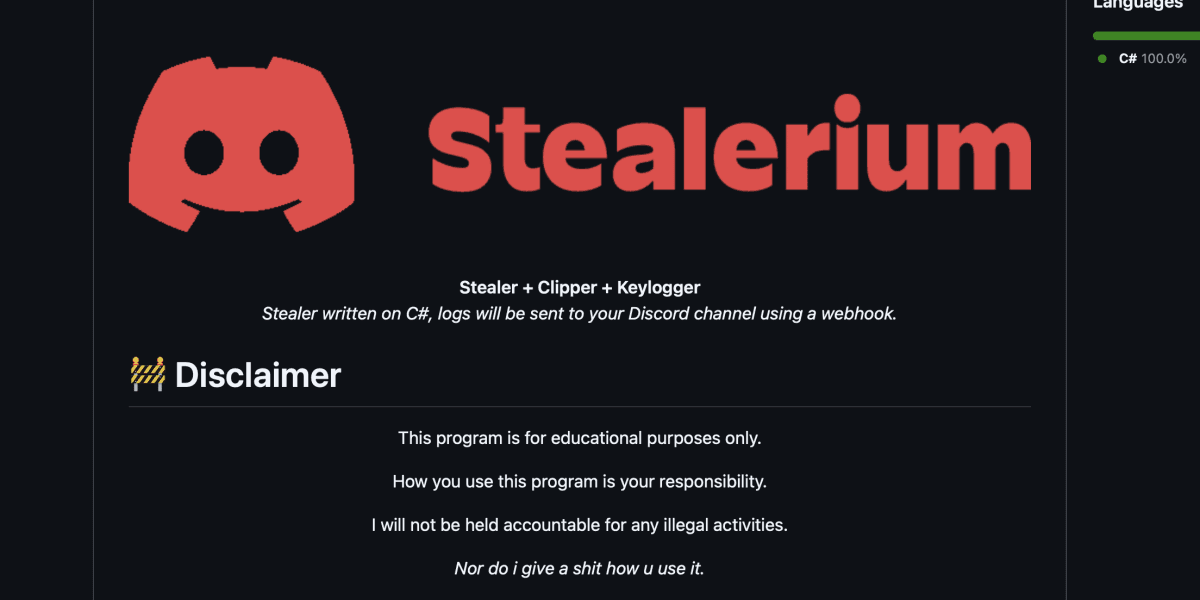
Stealerium Malware: A New Threat Exploiting Webcam Access for Extortion
Security researchers have uncovered a new malware strain, dubbed Stealerium, which is being distributed freely and is designed to secretly capture images via a victim's webcam during the consumption of pornographic content. This malware represents a growing trend in cybercrime, where attackers leverage personal and sensitive information for extortion purposes. Stealerium operates by monitoring the user's browsing activity to detect visits to pornographic websites. Once such activity is identified, the malware activates the webcam and captures images without the user's consent. These images are then used by cybercriminals to blackmail victims, threatening to release the compromising photos unless a ransom is paid. Technically, Stealerium's ability to detect specific browsing activity suggests it employs browser monitoring techniques, possibly through browser extensions, network traffic analysis, or direct memory inspection. The malware's capability to access the webcam indicates it may exploit vulnerabilities in webcam software or use social engineering tactics to gain necessary permissions. The captured images are likely exfiltrated through encrypted channels to avoid detection. The impact of Stealerium extends beyond financial loss from ransom payments. The psychological toll on victims can be severe, as the fear of public exposure of private moments can be highly distressing. This malware highlights the evolving tactics of cybercriminals, who are increasingly focusing on personal data for extortion rather than traditional data theft or system disruption. For cybersecurity professionals, the emergence of Stealerium underscores several critical considerations: 1. Endpoint Protection: Robust endpoint protection solutions are essential for detecting and blocking such malware. Behavior-based detection methods are particularly important, as they can identify suspicious activities even if the malware itself is not recognized by signature-based systems. 2. Webcam Security: Users should be educated about the risks associated with webcam access. Simple measures, such as covering the webcam when not in use, can mitigate some risks. Additionally, ensuring that webcam drivers and related software are up-to-date can help prevent exploitation of known vulnerabilities. 3. User Education: Comprehensive user education programs are crucial. Users must be aware of the risks of visiting untrusted websites and the importance of scrutinizing permission requests from applications. 4. Network Monitoring: Continuous monitoring of network traffic for unusual patterns, such as unexpected data exfiltration, can help detect malware like Stealerium before significant damage occurs. 5. Incident Response: Organizations should have well-defined incident response plans that include procedures for supporting affected users and reporting crimes to law enforcement agencies. From an expert perspective, Stealerium is indicative of a broader shift in cybercriminal tactics towards exploiting personal and sensitive information for extortion. The availability of such malware for free lowers the barrier to entry for attackers, enabling even low-skilled individuals to carry out sophisticated attacks. This trend underscores the need for continuous vigilance and the regular updating of security measures to keep pace with evolving threats. In conclusion, Stealerium represents a significant threat due to its invasive nature and the severe personal impact on victims. Cybersecurity professionals must prioritize robust detection methods, user education, and proactive security measures to mitigate the risks posed by this and similar malware strains.