
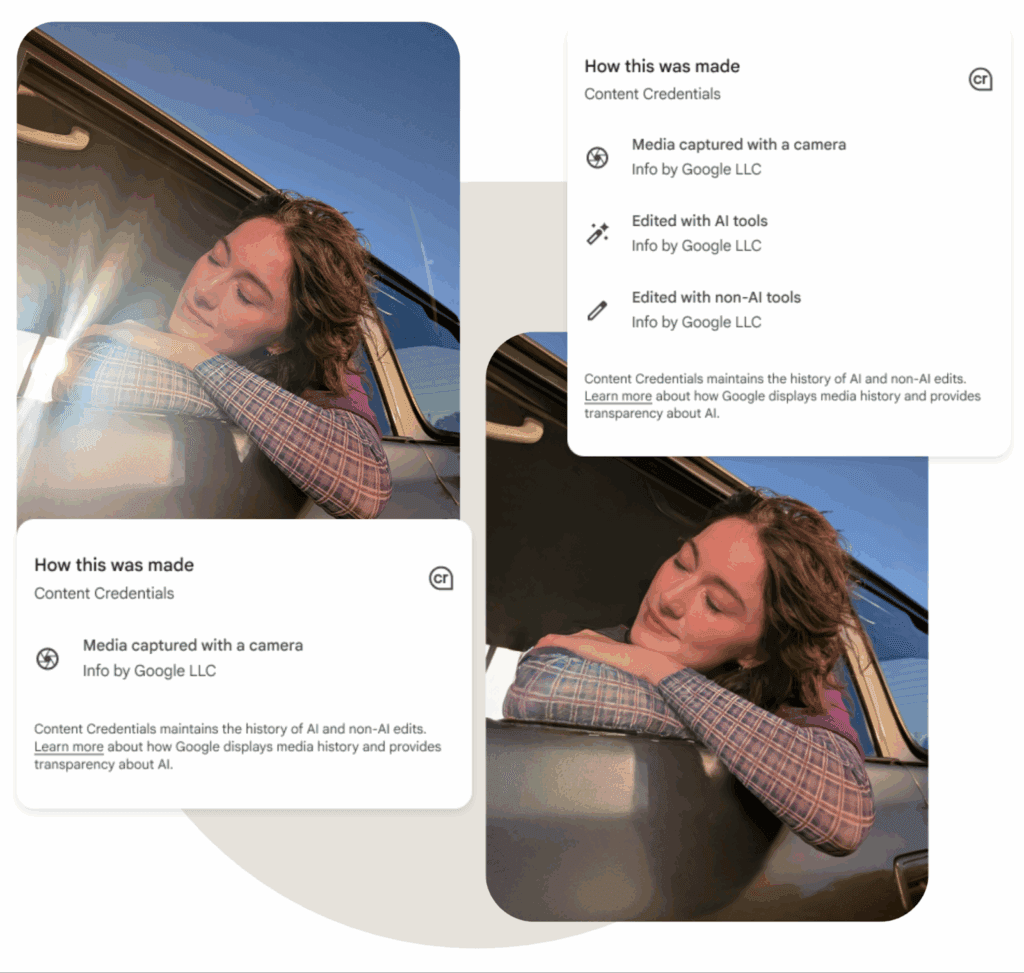
Google Integrates C2PA Standard in Pixel 10 to Combat AI-Generated Images
Google has integrated the C2PA (Content Authenticity Initiative) standard into the camera and Photos app of its new Pixel 10. This feature allows users to verify the authenticity of images and detect if they have been generated or modified by AI. Announced at Google's "Made by Google" event, this integration aims to enhance security and trust in visual content by distinguishing real images from AI-generated or edited ones. Technically, the C2PA standard likely involves embedding cryptographic metadata within image files to track their origin and modifications. This can help combat the rising threat of deepfakes and AI-generated misinformation. For cybersecurity professionals, this introduces a new tool for verifying digital content integrity, which is crucial in the fight against disinformation. The impact on the cybersecurity landscape could be substantial. As AI-generated content becomes more sophisticated, the ability to verify authenticity will be essential. This move by Google could encourage other manufacturers to adopt similar standards, leading to a more secure digital environment. However, while this is a positive development, it's important to note that it's not foolproof. Adversaries may find ways to bypass these checks, but it's a significant step forward in content authentication. For expert insights, this integration highlights the growing importance of content provenance in cybersecurity. It underscores the need for robust verification mechanisms to combat the spread of misinformation and deepfakes. Cybersecurity professionals should stay informed about such developments and consider how similar technologies can be integrated into their own security strategies.