
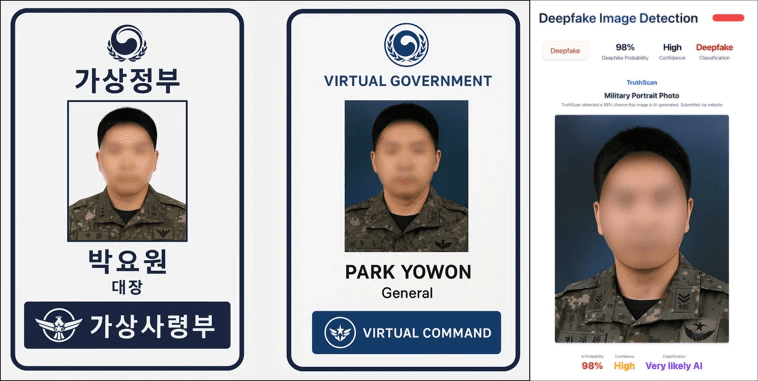
North Korean APT Group Kimsuky Leverages AI-Generated Military IDs in Sophisticated Phishing Campaign
The North Korean Advanced Persistent Threat (APT) group Kimsuky has been observed utilizing AI-generated fake military IDs in a new phishing campaign, according to a warning from GSC. This development marks a significant evolution in Kimsuky's tactics, techniques, and procedures (TTPs), demonstrating their adaptability and innovation in cyber espionage.
Technically, the use of AI to generate realistic military IDs represents a notable advancement in phishing tactics. AI-generated content can be highly convincing, making it more challenging for victims to discern the authenticity of documents. This increases the likelihood of successful phishing attacks, potentially leading to unauthorized access to sensitive information.
The impact of this campaign on the cybersecurity landscape is multifaceted. Firstly, it highlights the growing trend of threat actors leveraging AI to enhance their operations. This necessitates a corresponding evolution in defensive strategies, including the development of AI-driven detection mechanisms to identify and mitigate AI-generated threats.
From a defensive perspective, organizations should prioritize employee training to enhance vigilance and verification processes for documents and communications. Implementing robust security controls, such as multi-factor authentication (MFA), can also help mitigate the risk of successful phishing attacks.
This campaign underscores the need for continuous monitoring and adaptation in cybersecurity practices. As threat actors increasingly incorporate AI into their operations, defenders must stay ahead by leveraging advanced technologies and maintaining a proactive security posture.