
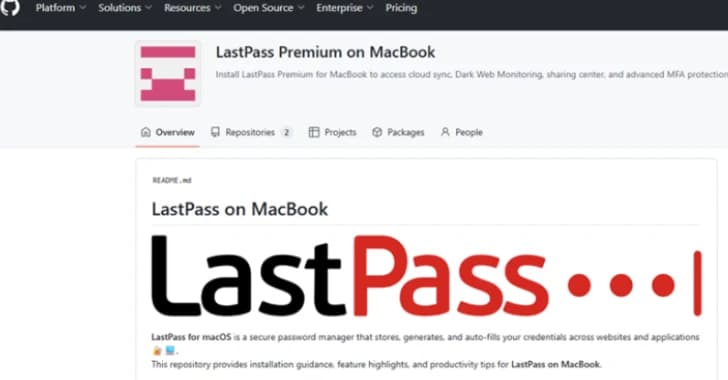
LastPass Warns of Ongoing macOS Malware Campaign via Fake GitHub Repositories
LastPass has issued a warning about an ongoing large-scale campaign targeting macOS users through fraudulent GitHub repositories. These repositories distribute malware disguised as legitimate tools, redirecting victims to download the Atomic infostealer. The campaign was discovered with contributions from researchers Alex Cox and Mike Kosak. This incident highlights the growing trend of attackers leveraging trusted platforms like GitHub to distribute malware. The technical implications of this campaign are significant. By exploiting the trust users place in GitHub, attackers can distribute malicious payloads that appear legitimate. The Atomic infostealer is particularly concerning due to its ability to steal sensitive information, including credentials and personal data. This campaign also underscores the increasing focus on macOS users, who may be less vigilant due to the platform's perceived security. The impact on the cybersecurity landscape is notable. This attack vector demonstrates the effectiveness of supply chain attacks and the need for enhanced verification processes for software downloads. Organizations should implement robust endpoint protection solutions capable of detecting and blocking infostealers. Additionally, user education on verifying the authenticity of software sources is crucial to mitigate such threats. For cybersecurity professionals, this incident serves as a reminder of the importance of monitoring repository activity and implementing detection mechanisms for malware. Enhancing user training to recognize and avoid suspicious downloads is also essential. By adopting a multi-layered defense strategy, organizations can better protect against such sophisticated attacks.