
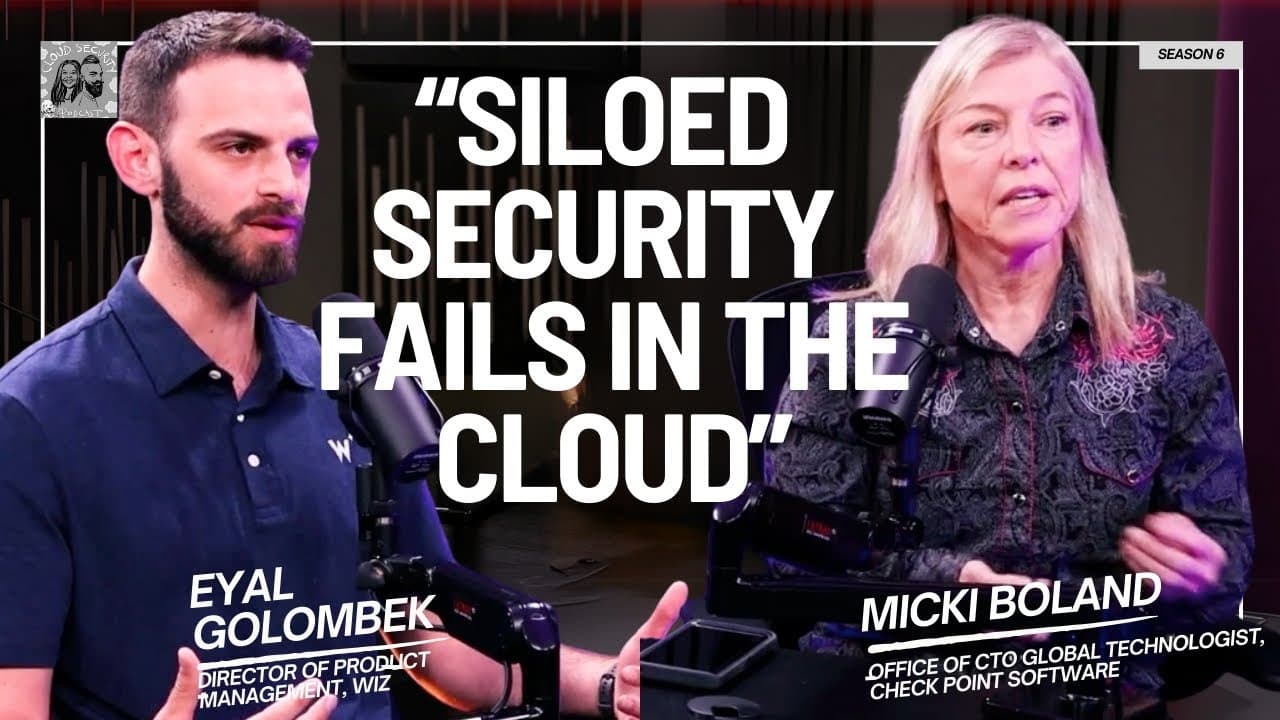
New Cloud Security Podcast Video Discusses Current Challenges and Future Trends
In this new video from the Cloud Security Podcast, experts discuss the current challenges and evolutions in cloud security, with a focus on blind spots and best practices for ISVs (Independent Software Vendors) and SaaS companies. The discussion is led by renowned experts in the field of cybersecurity, who share their experiences and perspectives on current and future trends.
Main topics discussed:
-
Definition of cloud security in 2025: The experts discuss the rapid evolution of cloud security, highlighting that companies are no longer just in a single cloud but in complex multi-cloud environments. Cloud security in 2025 is characterized by rapid growth, constant innovation, and the integration of AI to solve long-standing problems and introduce new ones.
-
Security challenges for ISVs and SaaS companies: ISVs and SaaS companies face unique security challenges in the cloud. The experts emphasize the importance of understanding the ephemeral nature of the cloud and adapting quickly to changes. They also warn against common blind spots, such as managing SaaS postures, API security, and risk management in hybrid cloud environments.
-
Integration of AI in cloud security: AI plays a crucial role in modern cloud security. It enables the automation of repetitive tasks, augments human capabilities, and provides an overview of risks and threats. The experts discuss the importance of AI for threat detection and prevention, as well as for managing postures and exposures.
Key points and insights:
The experts share several important insights:
- Managing postures and exposures: Posture management must evolve to include an analysis of attack paths and thinking like an attacker. It is no longer just about fixing misconfigurations but understanding how these configurations can lead to exposures.
-
Threat detection and response: Detection alone is not sufficient. Companies must adopt a proactive approach to prevent threats before they occur. AI can help automate detection and response, thereby reducing the workload on security teams.
-
Collaboration between developers and security teams: To succeed in a cloud environment, it is crucial for developers and security teams to collaborate closely. Developers must be involved in the security process from the beginning, and security teams must speak the language of developers to facilitate this collaboration.
Practical implications:
The information presented in this video has several practical implications for companies looking to improve their cloud security:
-
Adoption of AI: Companies must integrate AI into their cloud security strategies to automate repetitive tasks, augment human capabilities, and gain an overview of risks and threats.
-
Proactive threat management: Rather than focusing solely on detection, companies must adopt a proactive approach to prevent threats before they occur. This can include using AI to automate detection and response, as well as implementing robust security controls.
-
Collaboration and communication: Developers and security teams must collaborate closely to ensure that cloud applications and infrastructures are secure from the outset. This can include using common languages and tools, as well as integrating security processes into the development cycle.
In conclusion, this video provides a comprehensive overview of the challenges and opportunities in cloud security in 2025. The experts share valuable insights and practical recommendations to help companies navigate this rapidly evolving landscape. To learn more, watch the full video at the following address: https://www.youtube.com/watch?v=Lff8YUSI6kk