
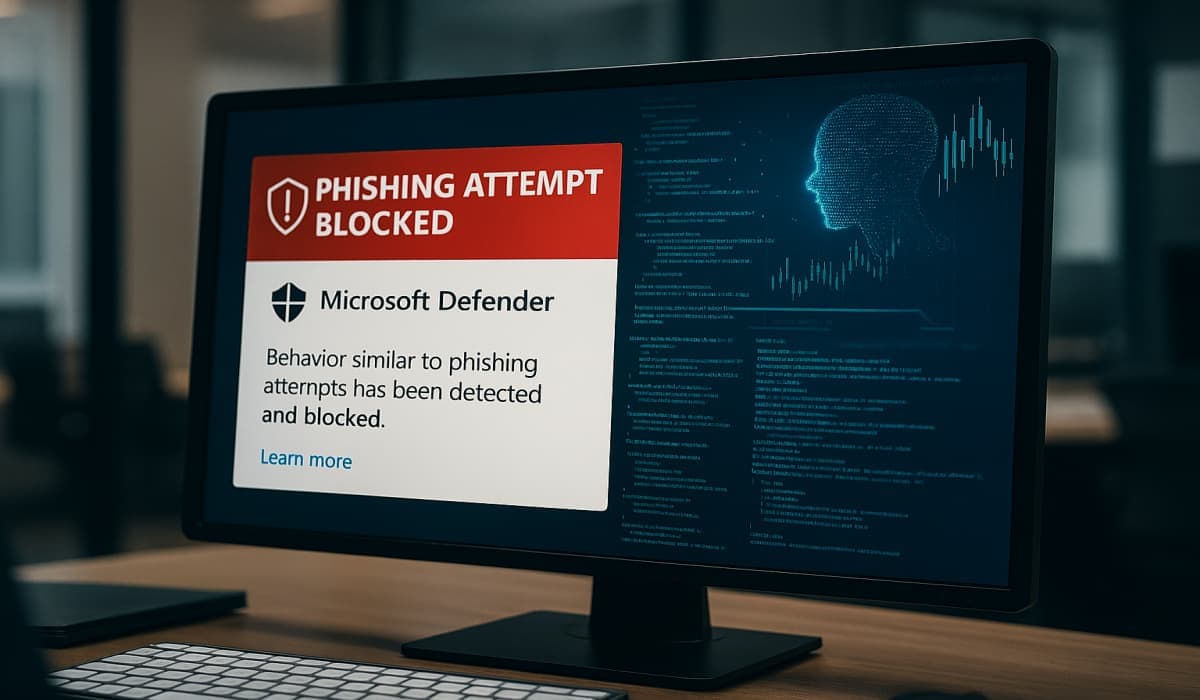
Microsoft Detects AI-Powered Phishing Campaign Hiding Malicious Code in SVG Files
Microsoft Threat Intelligence has identified a novel phishing campaign employing Large Language Models (LLMs) to embed malicious code within SVG files. These files, masquerading as enterprise dashboards, exploit the inherent trust in internal business tools. The utilization of AI in this context signifies a notable advancement in phishing methodologies, enabling attackers to conceal malicious payloads more effectively and bypass conventional detection mechanisms.
SVG files, being XML-based, support the inclusion of JavaScript, rendering them a viable medium for malicious scripts. By capitalizing on this feature, attackers can embed harmful code within seemingly benign image files. The incorporation of LLMs to generate or obfuscate this code introduces an additional layer of complexity, potentially facilitating the evasion of signature-based detection systems.
The ramifications of this attack are profound. Primarily, the exploitation of SVG files underscores the necessity for organizations to extend their scrutiny beyond traditional file types such as executables or PDFs. Secondly, the integration of AI in crafting malicious code highlights the escalating trend of attackers harnessing cutting-edge technologies to bolster their tactics. This evolution poses significant challenges for cybersecurity professionals in detecting and neutralizing such threats.
To counter this emerging threat vector, cybersecurity professionals should adopt a comprehensive defense strategy. This includes deploying robust email filtering solutions capable of scrutinizing SVG files for malicious content. Furthermore, endpoint protection systems must be enhanced to identify and block scripts embedded within SVG files. Employee education is paramount; personnel should be made aware of the risks associated with opening unsolicited files, even if they appear to be legitimate business documents.
This campaign serves as a poignant reminder of the dynamic nature of the threat landscape. As adversaries persist in their innovation, cybersecurity professionals must maintain vigilance and adapt their defensive measures to effectively counteract these sophisticated threats.