
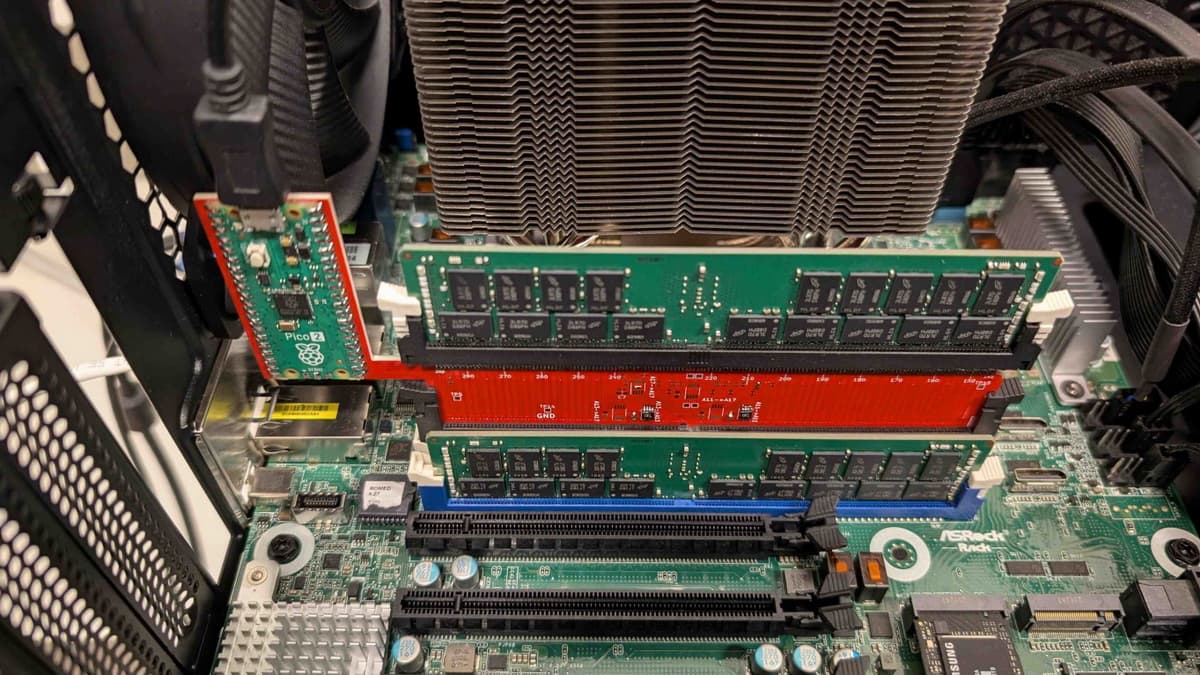
Battering RAM Attack Bypasses Intel and AMD Protections, Physical Access Required
The Battering RAM attack is a newly demonstrated hardware attack that bypasses security protections on the latest Intel and AMD processors, which are widely used in cloud infrastructure. This attack is particularly concerning because it targets technologies like AMD's SEV-SNP and Intel's SGX, which are designed to protect sensitive data even from privileged software attacks. SEV-SNP (Secure Encrypted Virtualization - Secure Nested Paging) is AMD's technology for securing virtual machines in cloud environments by encrypting VM memory and protecting it from even the hypervisor. SGX (Software Guard Extensions) is Intel's technology for creating secure enclaves in memory that are protected from the operating system itself. Both technologies are critical for securing sensitive data in cloud environments, where multiple tenants share the same physical hardware. The Battering RAM attack bypasses these protections, but it requires physical access to the target device. This requirement significantly limits the attack's applicability, as most threat actors do not have physical access to their targets' hardware. However, in scenarios where physical access is possible, such as in co-located data centers or through supply chain attacks, this vulnerability could be exploited to compromise sensitive data. Intel and AMD have reportedly downplayed the severity of this threat due to the physical access requirement. While this is understandable from a broad threat landscape perspective, organizations with high-security requirements should not dismiss this vulnerability outright. Physical security is a critical component of a comprehensive security strategy, and this attack underscores the importance of securing physical access to hardware. From a cybersecurity professional's perspective, the Battering RAM attack highlights the ongoing arms race between attackers and defenders in the hardware security space. While remote exploits often garner more attention, physical attacks can be just as devastating in the right circumstances. Organizations should consider this attack vector in their threat models, especially if they operate in environments where physical access to hardware cannot be strictly controlled. In conclusion, while the Battering RAM attack may not pose a widespread threat due to its physical access requirement, it serves as a reminder that physical security is an integral part of cybersecurity. Organizations should evaluate their physical security measures and consider the potential impact of such attacks on their operations.