
Clop Ransomware Group Claims Hack of Harvard University, Adds Institution to Data Leak Site
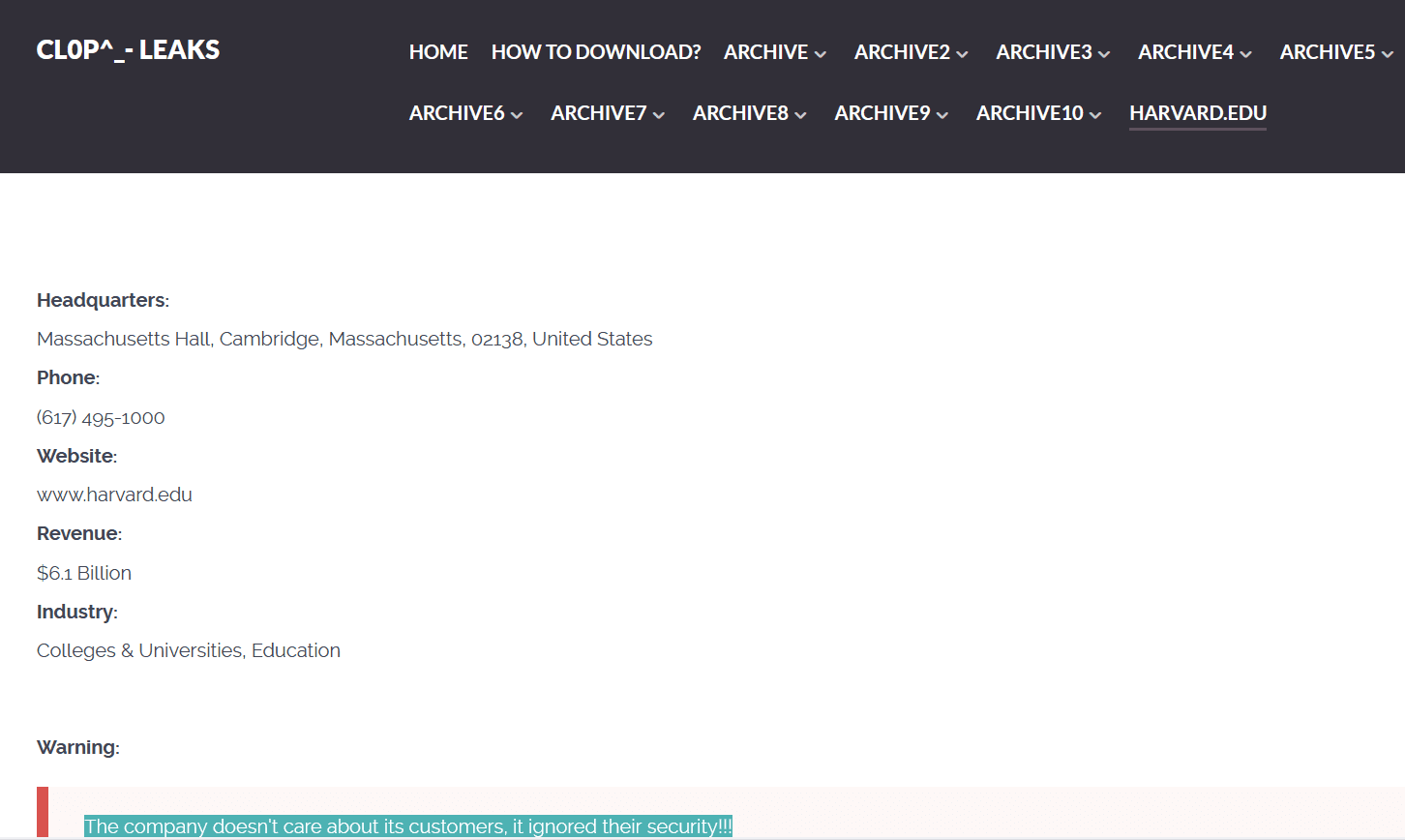
The Clop ransomware group has claimed responsibility for hacking Harvard University, adding the prestigious institution to its data leak site on the Tor network. According to a report by Security Affairs, Clop has created a dedicated page for Harvard on its site and announced its intention to disclose the stolen data. However, no additional details about the nature of the compromised data or the specific impacts of the breach have been provided.
Clop is known for its double-extortion tactics, where it encrypts victims' data and threatens to leak it if ransom demands are not met. The use of the Tor network for hosting the leak site underscores the group's commitment to maintaining anonymity and evading law enforcement.
This incident highlights the increasing audacity of ransomware groups in targeting high-profile organizations. Universities, with their vast repositories of sensitive data, are particularly attractive targets. The potential impact of this breach could be severe, depending on the nature of the compromised data, which could range from sensitive research to personal information of students and staff.
For cybersecurity professionals, this incident serves as a stark reminder of the evolving threat landscape. It underscores the need for robust cybersecurity measures, including regular security audits, employee training, and comprehensive incident response plans. Organizations should also monitor dark web and Tor sites for any signs of their data being leaked or sold.
In response to such threats, institutions should consider implementing advanced endpoint protection, network segmentation, and regular data backups to mitigate the impact of ransomware attacks. Additionally, proactive threat hunting and intelligence sharing within the cybersecurity community can help in early detection and response to such incidents.