
Winos 4.0 Hackers Expand Reach to Japan and Malaysia with HoldingHands RAT Malware
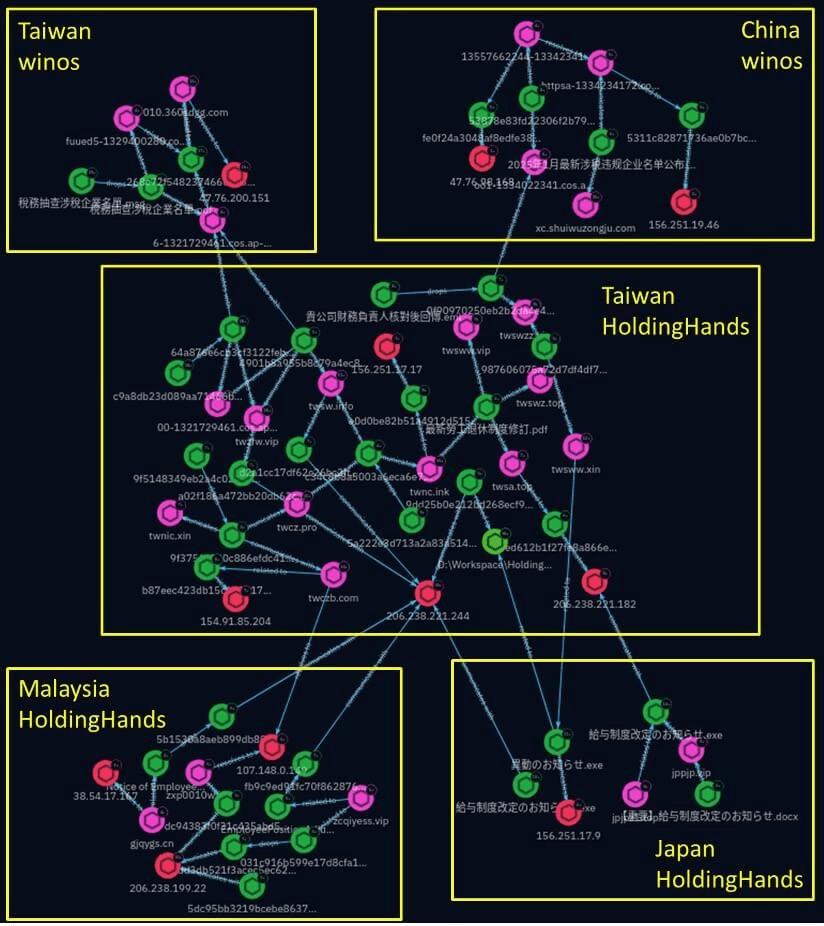
The hacking group known as Winos 4.0, also referred to as ValleyRAT, has extended its cyber attacks from China and Taiwan to Japan and Malaysia. The group is utilizing counterfeit PDF documents disguised as official communications from the Ministry of Finance to distribute the HoldingHands Remote Access Trojan (RAT). Additionally, the attackers have employed another remote access tool to infect target systems, indicating a sophisticated and multi-faceted approach to their operations. The use of fake PDFs is a classic social engineering tactic, exploiting the trust users place in documents that appear to come from legitimate sources. Once the malicious PDF is opened, it executes code that installs the HoldingHands RAT, granting the attackers remote control over the infected systems. This can lead to a range of malicious activities, including data exfiltration, further malware deployment, or ransomware attacks. The involvement of an additional remote access tool suggests that the attackers are employing multiple methods to maintain persistence and control over compromised systems. The expansion of Winos 4.0's operations to Japan and Malaysia signifies a broadening of their target scope, potentially indicating a shift towards targeting higher-value victims in these regions for financial gain or espionage purposes. This development underscores the need for organizations, particularly those in the financial sector, to bolster their defenses. Employee training to recognize phishing attempts, especially those involving fake PDFs, is crucial. Furthermore, robust endpoint protection and network monitoring capabilities are essential to detect and respond to RAT infections. The impact on the cybersecurity landscape is notable, as it reflects the ongoing trend of threat actors leveraging social engineering and remote access tools to infiltrate systems. This trend highlights the importance of comprehensive user awareness programs and advanced threat detection solutions. From an expert perspective, the evolution of Winos 4.0's tactics demonstrates a growing sophistication that necessitates a multi-layered defense strategy. Organizations should consider implementing email filtering solutions to block malicious PDFs and endpoint detection and response (EDR) tools to identify and mitigate RAT infections. In conclusion, the expansion of Winos 4.0's activities to Japan and Malaysia, coupled with their use of sophisticated malware and social engineering techniques, poses a significant threat to organizations in these regions. Cybersecurity professionals must remain vigilant and proactive in their defense strategies to mitigate the risks posed by this evolving threat landscape.