
Critical RCE Vulnerability in async-tar Rust Library: Understanding TARmageddon (CVE-2025-62518)
Researchers have uncovered a high-severity vulnerability in the async-tar Rust library and its forks, including tokio-tar. This flaw, named TARmageddon and identified as CVE-2025-62518 with a CVSS score of 8.1, could lead to remote code execution (RCE) under certain conditions. Discovered by Edera in late August 2025, this vulnerability impacts multiple versions of the library, posing a significant threat to systems that rely on these components.
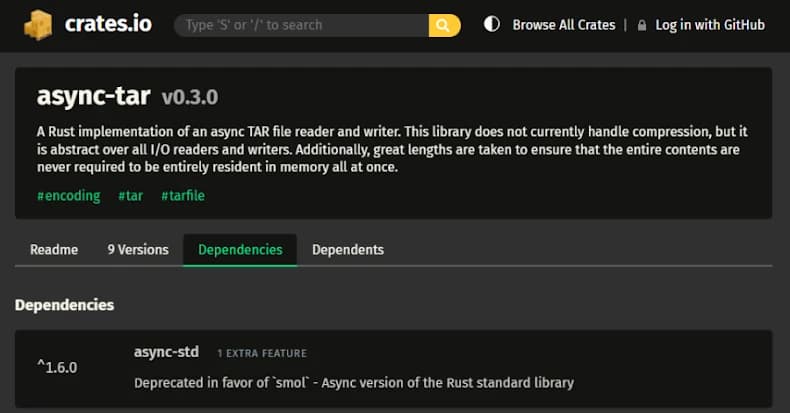
async-tar is a widely used Rust library for asynchronously processing tar archives. tokio-tar, a fork of async-tar, integrates with Tokio, a popular asynchronous runtime for Rust. These libraries are essential for many applications that handle tar files, making the vulnerability particularly concerning.
The vulnerability arises from improper handling of tar archives, which could allow attackers to craft malicious tar files that execute arbitrary code when processed by an affected application. The high CVSS score of 8.1 underscores the severity of this issue, indicating a significant risk to systems that use these libraries.
The technical implications of TARmageddon are far-reaching. Remote code execution vulnerabilities are among the most severe, as they can give attackers complete control over affected systems. In the context of async-tar and tokio-tar, this could mean that any application processing untrusted tar files is at risk. This includes web services that accept file uploads, backup systems, and other applications that handle tar archives.
The impact on the cybersecurity landscape is substantial. Rust is known for its emphasis on safety and security, but vulnerabilities like this highlight that no language or library is immune to security issues. The widespread use of async-tar and tokio-tar means that many projects could be affected, leading to a potential cascade of vulnerabilities across the software ecosystem.
For cybersecurity professionals, the key takeaway is the importance of promptly updating affected libraries and implementing robust input validation and sandboxing mechanisms. Developers should also be vigilant about the sources of tar files and ensure that untrusted files are handled with extreme caution. Regular security audits and dependency updates are crucial to mitigating such risks.
In conclusion, TARmageddon is a critical vulnerability that underscores the importance of secure coding practices and timely patch management. Cybersecurity professionals must act swiftly to address this issue and protect their systems from potential exploitation.