
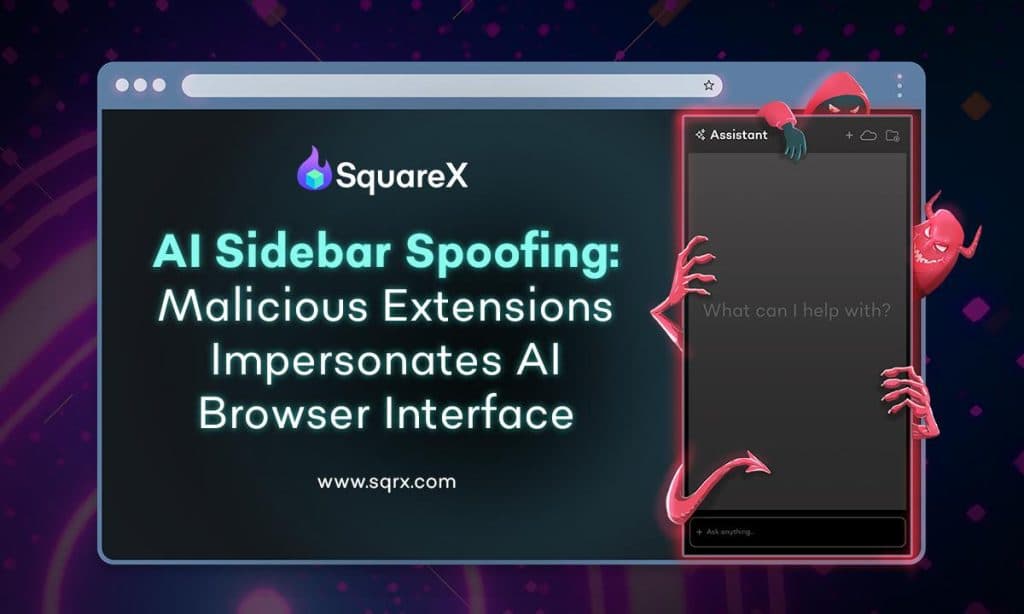
SquareX Uncovers Malicious Extensions Impersonating AI Browser Sidebars in New Spoofing Attack
SquareX has recently uncovered malicious browser extensions that mimic AI sidebars, a technique dubbed the "AI Sidebar Spoofing Attack." This discovery, revealed on October 23, 2025, in Palo Alto, California, highlights a growing trend of cybercriminals exploiting AI technologies to deceive users and steal sensitive data. The malicious extensions, disguised as legitimate AI tools, embed malicious scripts to intercept user data, including personal and professional information. This attack vector underscores the critical need for heightened vigilance and robust security measures in the face of evolving cyber threats.
Technical Context and Background: Browser extensions have become integral to the modern browsing experience, offering enhanced functionality and convenience. However, their access to extensive user data also makes them attractive targets for malicious actors. The AI Sidebar Spoofing Attack leverages this access by impersonating legitimate AI sidebars, which are increasingly popular for their ability to provide AI-powered assistance. These malicious extensions embed scripts that can perform various malicious activities, such as keylogging, form grabbing, and session hijacking.
Technical Implications: The technical implications of this attack are significant. Malicious extensions can intercept and exfiltrate sensitive data, including browsing history, cookies, and form inputs. The use of AI spoofing makes these extensions particularly dangerous, as users may not suspect anything is amiss. The attack highlights the need for stricter security measures in browser extension ecosystems, including better vetting processes and more robust permission systems.
Impact on the Cybersecurity Landscape: The discovery of the AI Sidebar Spoofing Attack underscores the evolving nature of cyber threats, particularly as AI technologies become more integrated into everyday tools. This attack demonstrates how malicious actors are quick to exploit new technologies to carry out their activities. The impact on the cybersecurity landscape is profound, as it highlights the need for continuous vigilance and adaptation to emerging threats.
Expert Insights: For cybersecurity professionals, this attack serves as a reminder of the importance of extension security. Organizations should implement robust security measures to protect against malicious extensions, including regular security audits and monitoring for suspicious activity. Additionally, user education is crucial. Users need to be aware of the risks associated with browser extensions and be able to recognize the signs of a malicious extension. This includes checking the permissions requested by the extension, reading reviews, and verifying the developer's identity.
Actionable Intelligence: To mitigate the risks posed by malicious extensions, cybersecurity professionals should consider the following steps:
- Implement stricter security measures for browser extensions, including better vetting processes and more robust permission systems.
- Conduct regular security audits to identify and remove malicious extensions.
- Monitor for suspicious activity that may indicate the presence of malicious extensions.
- Educate users about the risks associated with browser extensions and provide guidance on how to recognize and avoid malicious extensions.
In conclusion, the AI Sidebar Spoofing Attack discovered by SquareX highlights the growing threat posed by malicious browser extensions. Cybersecurity professionals must remain vigilant and implement robust security measures to protect against these evolving threats.