
Cybercriminals Exploit RMM Tools to Hijack Trucking Firms and Steal Cargo
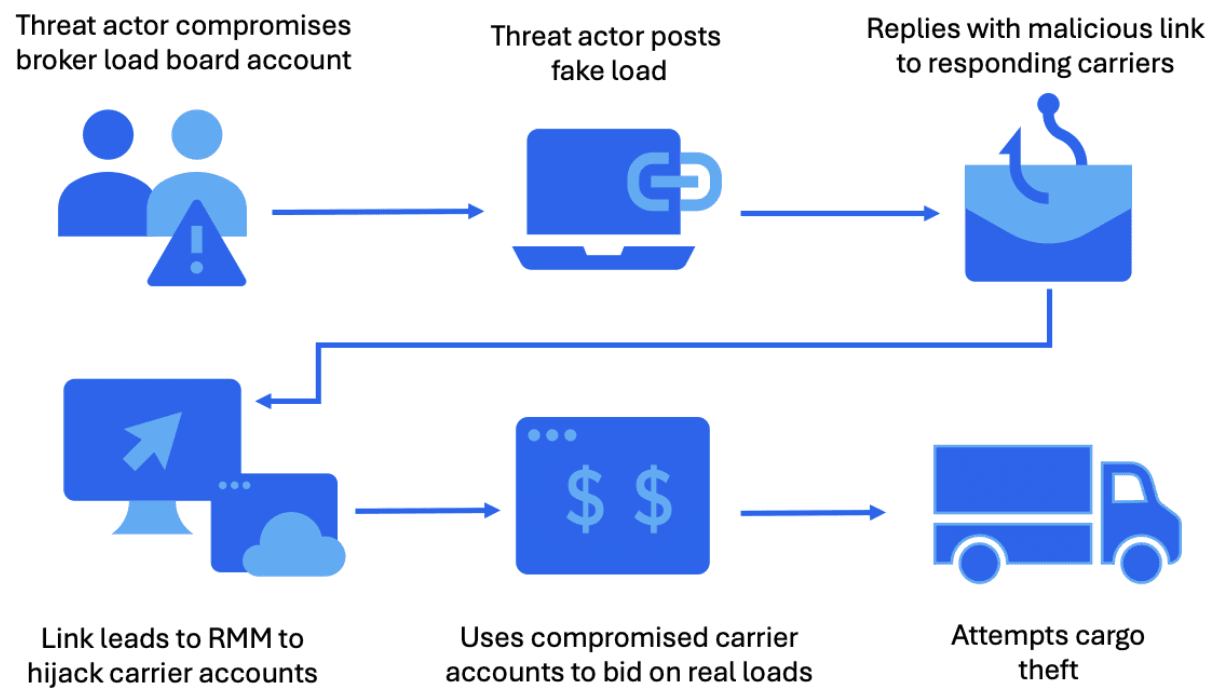
Cybercriminals have been targeting trucking companies since June 2023 by exploiting Remote Monitoring and Management (RMM) software to facilitate cargo theft. This campaign involves collaboration with organized crime groups to steal primarily food and beverages. The attackers gain remote access to the companies' systems, likely through phishing or social engineering tactics, and use RMM tools to monitor and control operations, enabling the theft of shipments. RMM tools are legitimate software used by IT teams for remote system management. However, their powerful capabilities make them attractive targets for abuse. In this case, cybercriminals leverage these tools to bypass security measures, monitor shipments, and even reroute trucks or disable security systems to facilitate theft. This attack vector is particularly concerning because RMM tools are often whitelisted in corporate environments, making their malicious use harder to detect. The impact of these attacks is significant, with companies experiencing substantial financial losses due to stolen cargo. Beyond the direct losses, there are potential disruptions to supply chains and increased operational costs as companies invest in additional security measures. Moreover, this trend highlights the growing convergence of cyber and physical crime, where cybercriminals collaborate with organized crime groups to maximize profits. From a cybersecurity perspective, defending against such attacks requires a multi-layered approach. Companies should monitor RMM tool usage closely, enforce strong authentication mechanisms like multi-factor authentication (MFA), and conduct regular audits of RMM tool configurations. Employee education is also critical, as phishing is likely the initial attack vector. Network segmentation can limit the impact of compromised RMM tools by restricting their access to only necessary systems. This campaign underscores the need for robust cybersecurity measures in the logistics and transportation sectors. As cyber and physical threats continue to converge, organizations must adopt a holistic security strategy that addresses both digital and physical risks.