
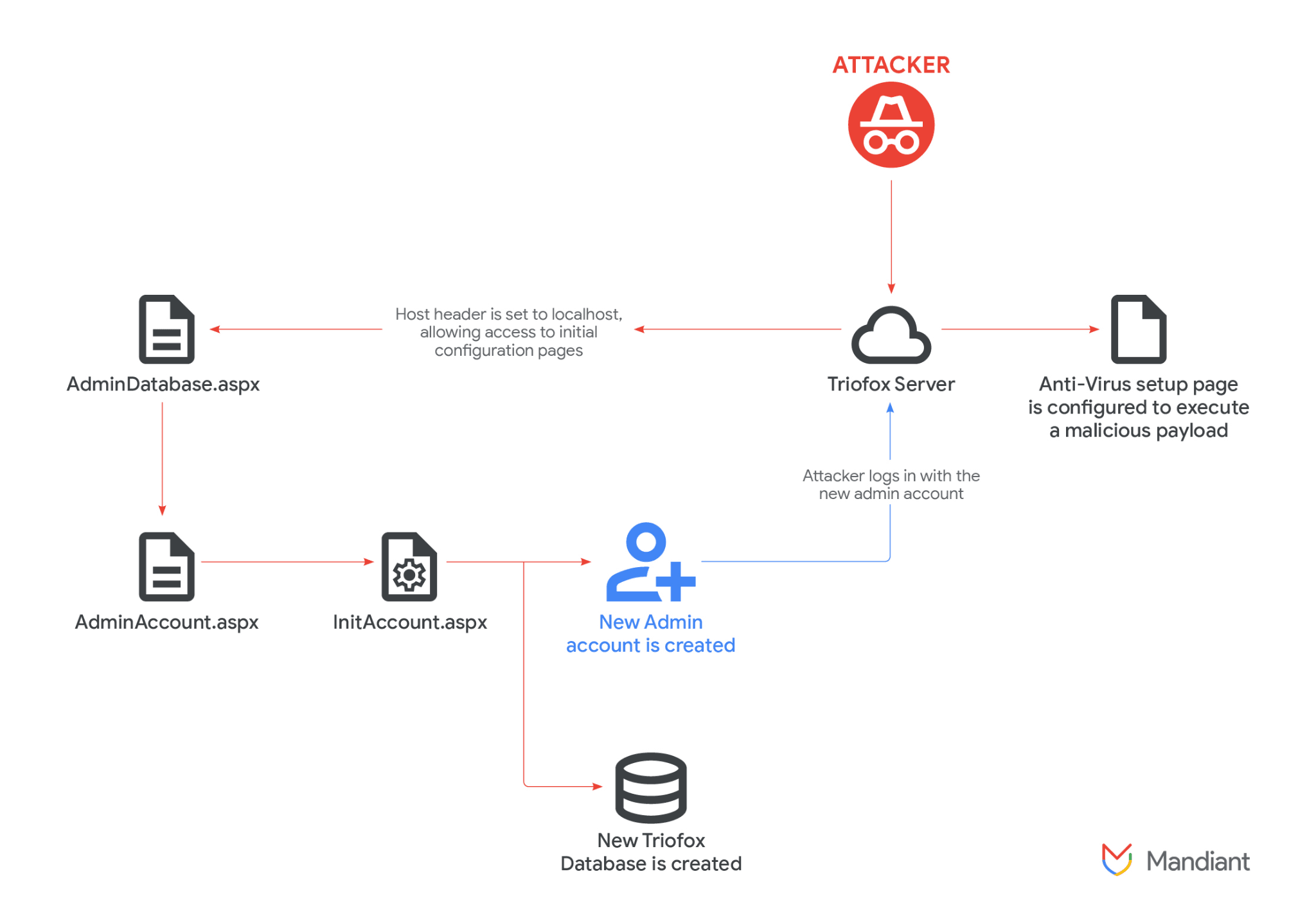
Critical Triofox Vulnerability (CVE-2025-12480) Exploited to Deploy Malicious Payloads via Antivirus Configuration
A critical vulnerability in Triofox, identified as CVE-2025-12480, has been exploited by malicious actors to bypass authentication mechanisms and deploy remote access tools. This vulnerability, which has a CVSS score of 9.1, was discovered by researchers at Mandiant, a subsidiary of Google. The exploitation involved the misuse of Triofox's antivirus configuration feature to download and execute malicious payloads. The vulnerability has since been patched, but the incident underscores the importance of timely updates and comprehensive security measures. The high severity score indicates the potential for significant impact, including unauthorized access and data breaches. Cybersecurity professionals should ensure that their systems are updated and monitor for any signs of exploitation. This incident highlights the need for robust security practices, including regular vulnerability assessments and patch management. The exploitation of the antivirus feature to deploy malware is particularly concerning because it subverts a security mechanism intended to protect against such threats. This tactic demonstrates the sophistication of modern cyber threats and the need for multi-layered defense strategies. Organizations using Triofox should immediately apply the latest patches and review their security configurations to prevent similar attacks. The involvement of Mandiant in detecting this vulnerability adds credibility to the threat assessment. Mandiant is known for its expertise in cybersecurity and threat intelligence, and their findings should be taken seriously by the cybersecurity community. The high CVSS score of 9.1 indicates that this vulnerability poses a significant risk, and organizations should prioritize patching and monitoring for any signs of exploitation. In addition to patching, organizations should consider implementing additional security measures such as network segmentation, intrusion detection systems, and regular security audits. These measures can help mitigate the risk of similar vulnerabilities being exploited in the future.