
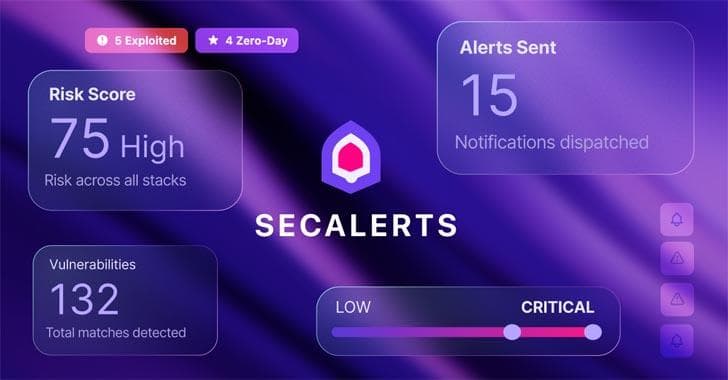
SecAlerts Addresses Vulnerability Management Challenges in Enterprises
Enterprises today face considerable challenges in managing vulnerabilities due to the extensive use of software and the increasing volume of threats. According to a recent article from The Hacker News, SecAlerts offers a solution to optimize vulnerability management by reducing the operational load associated with tracking alerts, notifications, and updates. The article notes that organizations often lack complete visibility into their software assets, resulting in nearly 10% of critical vulnerabilities going undetected due to alert overload. This visibility gap increases the risk of unpatched vulnerabilities, exposing organizations to potential exploits. While the article does not provide specific technical details such as CVE references or tool specifications, it emphasizes the importance of efficient vulnerability management in mitigating cyber risks. The primary impact of SecAlerts is expected to be a reduction in unpatched vulnerabilities, thereby enhancing overall security posture.
Technically, the solution aims to address two critical issues in vulnerability management: lack of asset visibility and alert fatigue. The statistic that 10% of critical vulnerabilities go undetected highlights the severity of the problem. In large enterprises with thousands of software applications, this could mean hundreds of unpatched vulnerabilities, each representing a potential attack vector.
For cybersecurity professionals, the key takeaway is the importance of comprehensive asset visibility and effective alert management. While SecAlerts proposes a solution to these challenges, the lack of technical details in the article makes it difficult to assess its specific capabilities. However, the solution underscores a critical need in the industry for tools that can help security teams manage the growing volume of vulnerability alerts more effectively.
In terms of actionable intelligence, organizations should focus on improving their asset management practices and evaluating solutions that can help reduce alert fatigue. Regular vulnerability scanning, prioritizing patches based on risk, and maintaining an accurate inventory of software assets are essential best practices that can help mitigate the risks associated with unpatched vulnerabilities.
The impact of solutions like SecAlerts on the cybersecurity landscape could be significant if they successfully address the operational challenges of vulnerability management. As threats continue to evolve and increase in volume, tools that enhance visibility and streamline alert management will be crucial for maintaining robust security postures.