
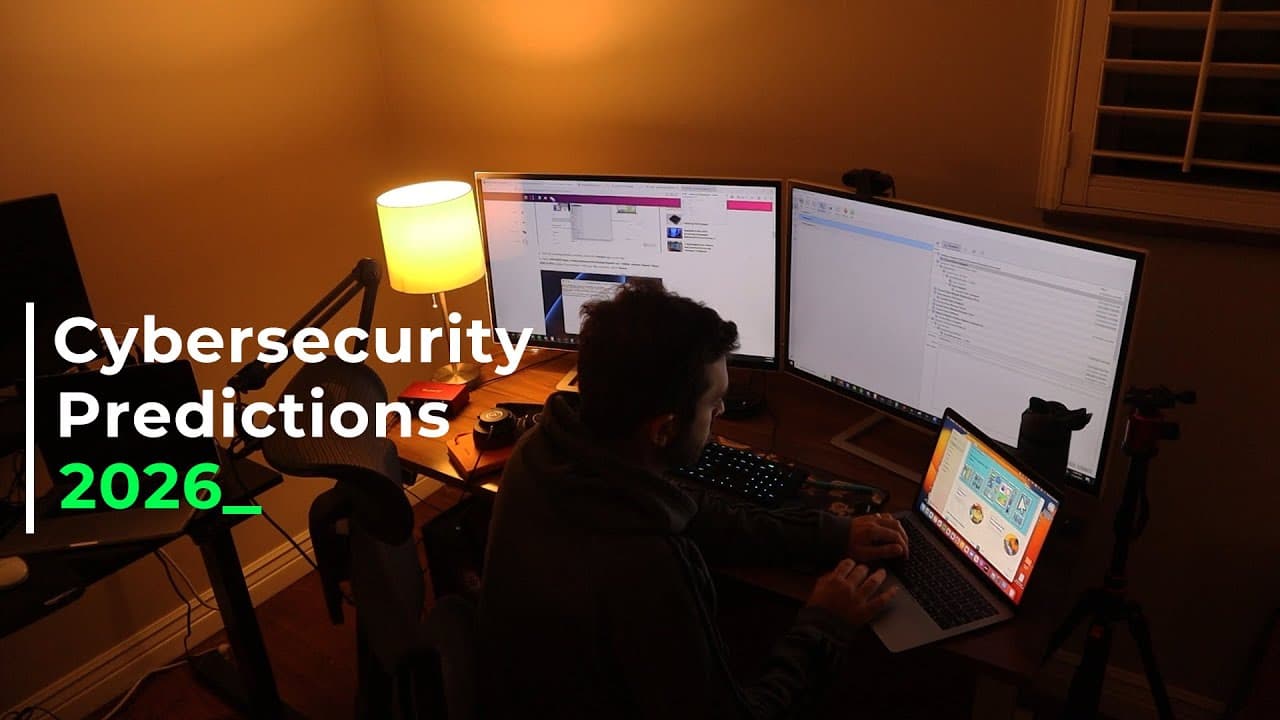
New Video from @collinsinfosec: In-Depth Analysis of Cybersecurity Trends and Predictions for 2026
In this video, Collins Infosec provides an in-depth analysis of trends and predictions for the cybersecurity sector in 2026, addressing both professional opportunities and the evolution of the threat landscape. The tone is both realistic and forward-looking, offering a nuanced view of a constantly changing field.
The first part of the video focuses on the cybersecurity job market, which has been marked by persistent turbulence since 2023. Job opportunities are becoming increasingly competitive, with a consolidation of roles and higher barriers to entry. Companies are now looking for versatile profiles with advanced skills and significant experience, often at the senior level. A notable phenomenon is the convergence of positions: teams that once consisted of five to ten people are being reduced to three, partly due to economic pressure and the massive adoption of AI, which allows for doing "more with less." This trend makes access to entry-level positions even more difficult, although it remains possible with adequate preparation. Compared to other IT fields, such as software development, cybersecurity is holding up better, notably because AI expands the attack surface and creates new protection needs. However, employers now have an advantage in salary negotiations, except for candidates with rare skills or solid experience. Salary increases are expected to remain moderate, with variations depending on regions and specializations.
Moving on to the threat landscape, the video highlights the growing impact of artificial intelligence, which polarizes debates between its supporters and detractors. AI is radically transforming attack techniques, particularly through deepfakes and synthetic identities. Tools like Sora 2 enable the creation of ultra-realistic videos, facilitating identity theft for social engineering campaigns targeting executives, colleagues, or even loved ones. By 2026, it is expected that AI will no longer be just one tool among others in cyberattacks but will become a central actor capable of causing major breaches. The vulnerabilities related to AI are numerous: data leaks via language models (LLM), direct attacks on the models themselves, or compromising autonomous agents. At the same time, AI lowers the entry barrier for cybercriminals, allowing them to develop sophisticated offensive tools or refine their phishing techniques. On the defense side, Security Operations Centers (SOCs) are increasingly integrating AI to automate the detection, analysis, and response to incidents, moving from an experimental phase to a more autonomous approach.
Another key topic is the evolution of ransomware. In 2025, a historic decline in ransom payments was observed, indicating that companies are strengthening their defenses, particularly through robust backup policies and cyber insurance. However, attackers are adapting their strategies: some groups are abandoning data encryption in favor of extortion through the threat of disclosing sensitive information, aiming to harm the victims' reputation. This trend is expected to continue in 2026, with increasingly innovative tactics. Finally, geopolitical tensions continue to fuel cyber threats, with states like Russia, China, North Korea, or Iran intensifying their offensive activities. Critical infrastructures (ICS, OT) and traditional IT systems remain prime targets, often through tools shared between cybercriminals and state actors.
For cybersecurity professionals and aspirants, the video offers practical advice for navigating this demanding context. It is essential to focus on the fundamentals, which remain unchanged despite technological evolution: user awareness, mastery of security best practices, and adaptation to new threats. Developing a solid portfolio, engaging in side projects, and staying curious are major assets. As the attack surface continues to expand, there are numerous opportunities to provide technical or strategic solutions, whether for beginners or experienced experts.
In summary, this video paints a both alarming and stimulating portrait of the future of cybersecurity. It emphasizes the importance of remaining agile, continuously training, and not being overwhelmed by the hype around new technologies. The challenges are numerous, but so are the opportunities for those who can adapt.