
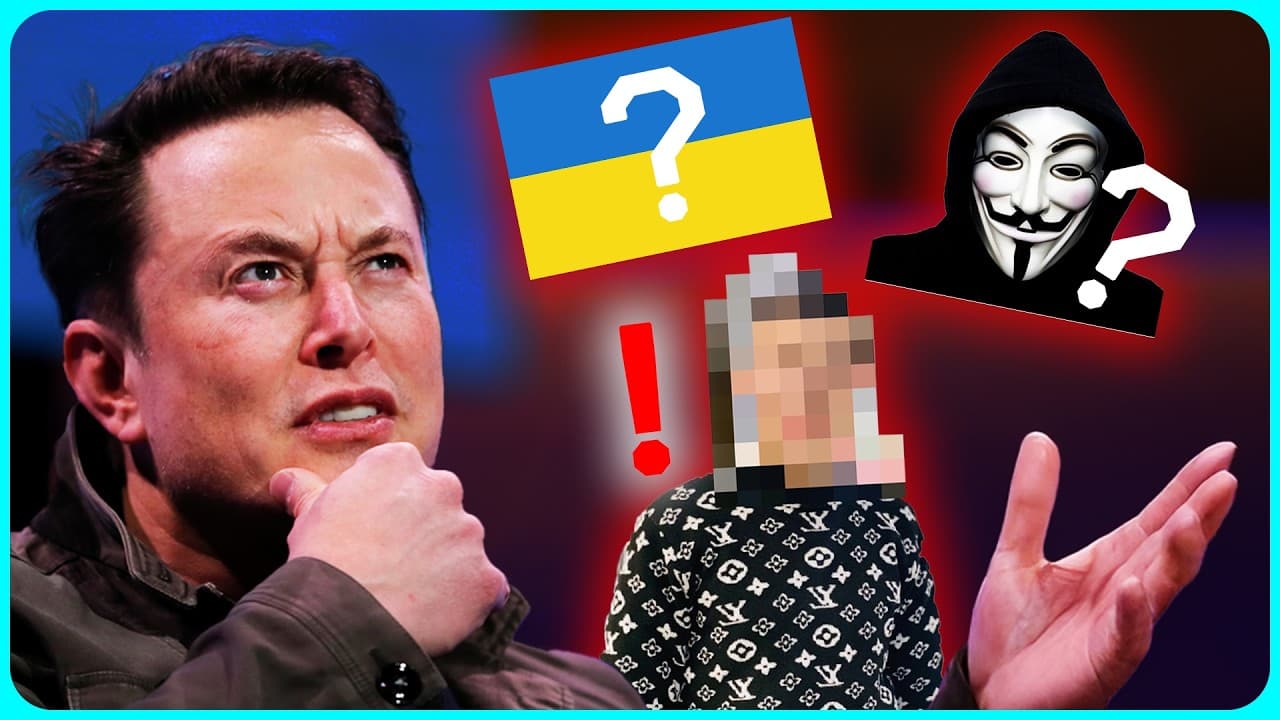
New Video from @seytonic Discusses Recent DDoS Attacks on X, Apple's Legal Battle, and North Korean Hackers Banned from ChatGPT
The video begins by discussing the recent DDoS attacks against the platform X, formerly known as Twitter. Initially, suspicions fell on Ukraine, then on the hacker group Anonymous, and finally on an Egyptian student. However, none of these leads were conclusive. The analysis of the IP addresses involved in the attack did not reveal a strong Ukrainian presence, and the site opdreadnought.com, which seemed to claim the attack on behalf of Anonymous, was deemed not credible. Subsequently, a hacker group called "Dark Storm Team" directly claimed responsibility for the attack. This group is known for selling DDoS services and for pro-Palestinian hacktivism activities. The attack succeeded by exploiting a security flaw in X. Although X uses Cloudflare to mitigate DDoS attacks, some of their servers were not properly protected behind Cloudflare. This allowed the attackers to use a botnet composed of hacked security cameras and DVRs to directly target these servers, causing connectivity issues. The video then discusses the efforts of Robert Baptiste, a security researcher, to identify the members of "Dark Storm Team." Using OSINT (Open Source Intelligence) techniques, he tracked the group's Telegram and Twitter profiles, establishing links between various social media accounts and crypto addresses. However, his conclusions proved incorrect, and the Egyptian student initially accused had no actual connection to the attack. The video then moves to another significant piece of news in the field of cybersecurity: Apple has hired lawyers to contest a decision by the British government. The latter used a controversial law to force Apple to disable advanced data protection for users in the UK. This feature enables end-to-end encryption of iCloud backups, making it impossible for law enforcement to access user data. Apple has decided to contest this decision before the investigatory powers tribunal, but the outcome of this case could remain secret for national security reasons. Finally, the video mentions that Kim Jong Un and his hackers have been banned from ChatGPT. According to an OpenAI threat report, North Korean hackers were using ChatGPT for various malicious activities, including coding assistance, creating phishing campaigns, and social engineering targeting the cryptocurrency industry. They also used ChatGPT to create resumes and online work profiles to pose as remote workers in the United States. However, an OPSEC (Operational Security) error allowed these activities to be linked to specific North Korean hacker groups, including Kimsuky and APT38. The video ends on a humorous note, highlighting that even though North Korean hackers are banned from ChatGPT, they have probably already found alternatives.