
Elastic Security Labs Uncovers Stealthy NANOREMOTE Backdoor Using Google Drive API for C2
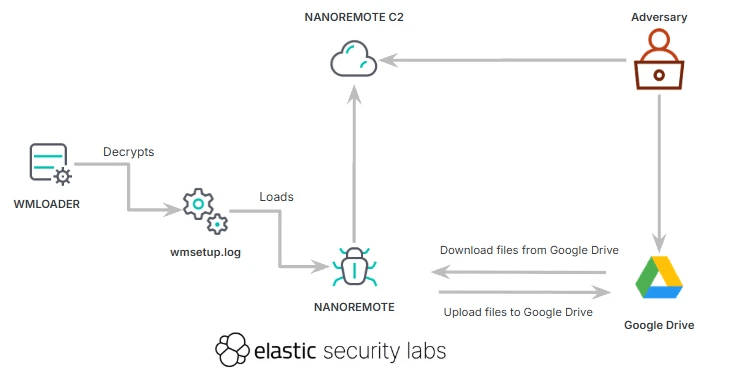
Elastic Security Labs has identified a new Windows backdoor named NANOREMOTE, which leverages the Google Drive API as its command and control (C2) infrastructure. This malware shares code similarities with the FINALDRAFT implant, also known as Squidoor, which has been associated with threats exploiting the Microsoft Graph API. The use of legitimate services like Google Drive for C2 purposes allows NANOREMOTE to maintain discreet communication with its operators, significantly complicating detection efforts. This technique is part of a broader trend where threat actors utilize trusted cloud services to blend malicious traffic with legitimate network activity. While the article does not provide specific details on attribution, detection dates, or concrete impacts on victims, the discovery underscores the evolving tactics of malware developers. For cybersecurity professionals, this highlights the importance of monitoring and analyzing traffic to commonly used cloud services more rigorously. The similarities with FINALDRAFT suggest that the threat actors behind NANOREMOTE may have access to or be sharing code with other advanced persistent threat (APT) groups. Organizations should consider implementing more granular traffic inspection and anomaly detection mechanisms to identify potential malicious use of legitimate services.