
Emerging Cybersecurity Threats: WhatsApp Hijacks, MCP Data Leaks, and AI Reconnaissance
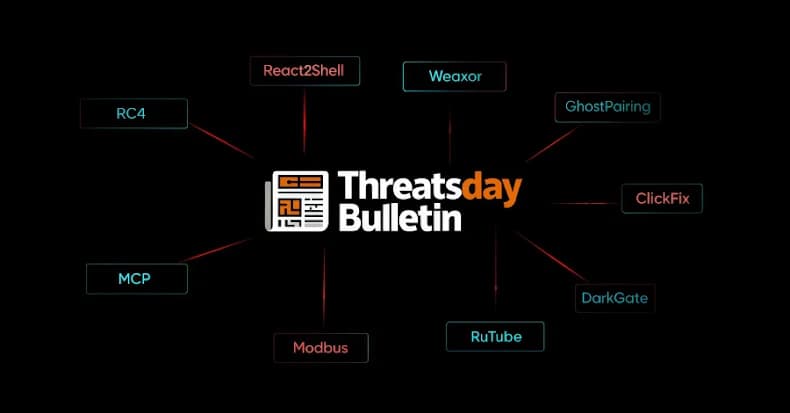
Based on the summary provided in the message, this week's ThreatsDay Bulletin highlights several emerging cybersecurity threats that warrant immediate attention from security professionals. It is important to note that the original article could not be accessed for verification, so this analysis is based solely on the information provided in the message summary. The bulletin reports a rise in WhatsApp account hijacks through social engineering techniques. Social engineering remains a potent attack vector, exploiting human psychology to bypass technical security measures. These incidents underscore the critical need for comprehensive user education programs and the implementation of multi-factor authentication to mitigate the risk of account takeovers. Data leaks associated with the Microsoft Cloud Platform (MCP) protocol are also highlighted. While the summary does not provide specific details about the nature of these leaks, they likely stem from misconfigurations or vulnerabilities within the protocol. Given the extensive use of Microsoft's cloud services in enterprise environments, such leaks could have far-reaching implications for data privacy and security. Organizations leveraging MCP should prioritize thorough security audits and ensure adherence to best practices in configuration management. An AI-based reconnaissance campaign targeting cloud infrastructures is noted in the bulletin. This represents a significant evolution in attack methodologies, as AI can automate and accelerate the process of identifying vulnerabilities. Traditional reconnaissance techniques are often time-consuming and more easily detected. By leveraging AI, attackers can efficiently probe cloud environments for weaknesses, enabling more targeted and effective exploits. To counter this threat, organizations must invest in advanced threat detection and response mechanisms that can keep pace with AI-driven attacks. The bulletin also mentions the React2Shell exploit, which allows for remote code execution via misconfigured React components. React is a widely used JavaScript library for building user interfaces, and its popularity makes it an attractive target for attackers. Misconfigurations in React applications can lead to severe security breaches, including the execution of arbitrary code on affected systems. Developers must adhere to secure coding practices and conduct regular security audits of their applications to mitigate this risk. Additionally, the bulletin highlights the trend of attackers adapting existing tools, such as Remote Access Trojans (RATs) and Command and Control (C2) frameworks, with minor modifications to evade detection. This cat-and-mouse game between attackers and defenders emphasizes the need for a layered security approach. Organizations should deploy advanced behavioral analysis and anomaly detection systems to identify and mitigate these evolving threats effectively. Overall, the threats outlined in the bulletin underscore the dynamic and increasingly sophisticated nature of the cybersecurity landscape. The use of social engineering, AI-driven reconnaissance, and adapted malware tools demonstrates the agility and resourcefulness of modern attackers. To defend against these threats, organizations must adopt a proactive and multi-faceted security strategy. This includes continuous monitoring, regular security assessments, user education, and the deployment of advanced security technologies. However, it is crucial to acknowledge that this analysis is based on a summary of the original article. Without access to the full article, some details may be incomplete or lack context. Security professionals are advised to consult the original source for comprehensive and accurate information.