
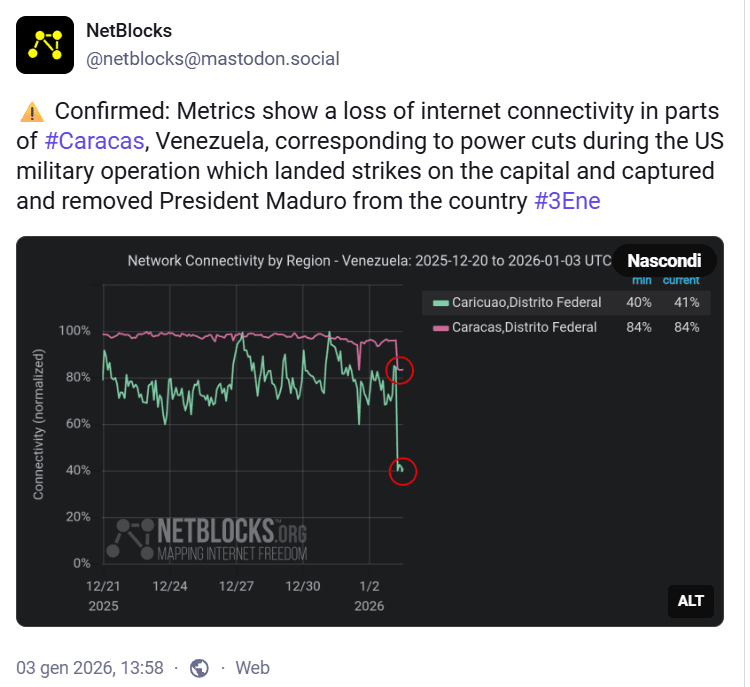
Major Internet Disruptions in Venezuela Coincide with U.S. Military Operation: A Cybersecurity Analysis
On July 31, 2024, Venezuela experienced significant internet disruptions, coinciding with a U.S. military operation that resulted in the capture of President Nicolás Maduro and his wife. Users reported widespread outages and access restrictions, particularly affecting major internet service providers (ISPs) such as CANTV and Movistar. While the article does not explicitly attribute these disruptions to cyber operations by the U.S., the coincidence raises important questions about the intersection of military actions and cyber infrastructure. From a technical standpoint, internet disruptions can stem from various causes, including DNS hijacking, routing anomalies, distributed denial-of-service (DDoS) attacks, or physical infrastructure damage. However, the article does not provide specific technical details on the nature of these disruptions or the methods employed to enforce censorship. This lack of information makes it challenging to assess the exact mechanisms behind the outages. The impact of these disruptions is significant, with users experiencing limited connectivity and difficulties accessing online platforms. Such events underscore the critical role of resilient cyber infrastructure in maintaining communication and information flow, particularly during geopolitical crises. For cybersecurity professionals, this incident highlights the need for robust monitoring and incident response strategies to mitigate the effects of sudden connectivity losses. In terms of the broader cybersecurity landscape, this event serves as a reminder of the potential for cyber operations to coincide with military actions. While the article does not confirm the involvement of U.S. cyber capabilities, the timing of the disruptions is noteworthy. Cybersecurity experts should remain vigilant about the potential for state-sponsored cyber activities during geopolitical events and be prepared to respond to similar incidents in the future. For organizations and individuals in affected regions, the use of virtual private networks (VPNs) and proxy servers can be essential tools for circumventing censorship and maintaining access to critical information. However, the effectiveness of these tools depends on the specific methods used to restrict internet access, which are not detailed in the article. In conclusion, while the exact cause and methods of the internet disruptions in Venezuela remain unclear, this event underscores the importance of cyber resilience and preparedness in the face of geopolitical instability. Cybersecurity professionals should continue to monitor the situation and be prepared to adapt their strategies as more information becomes available.