
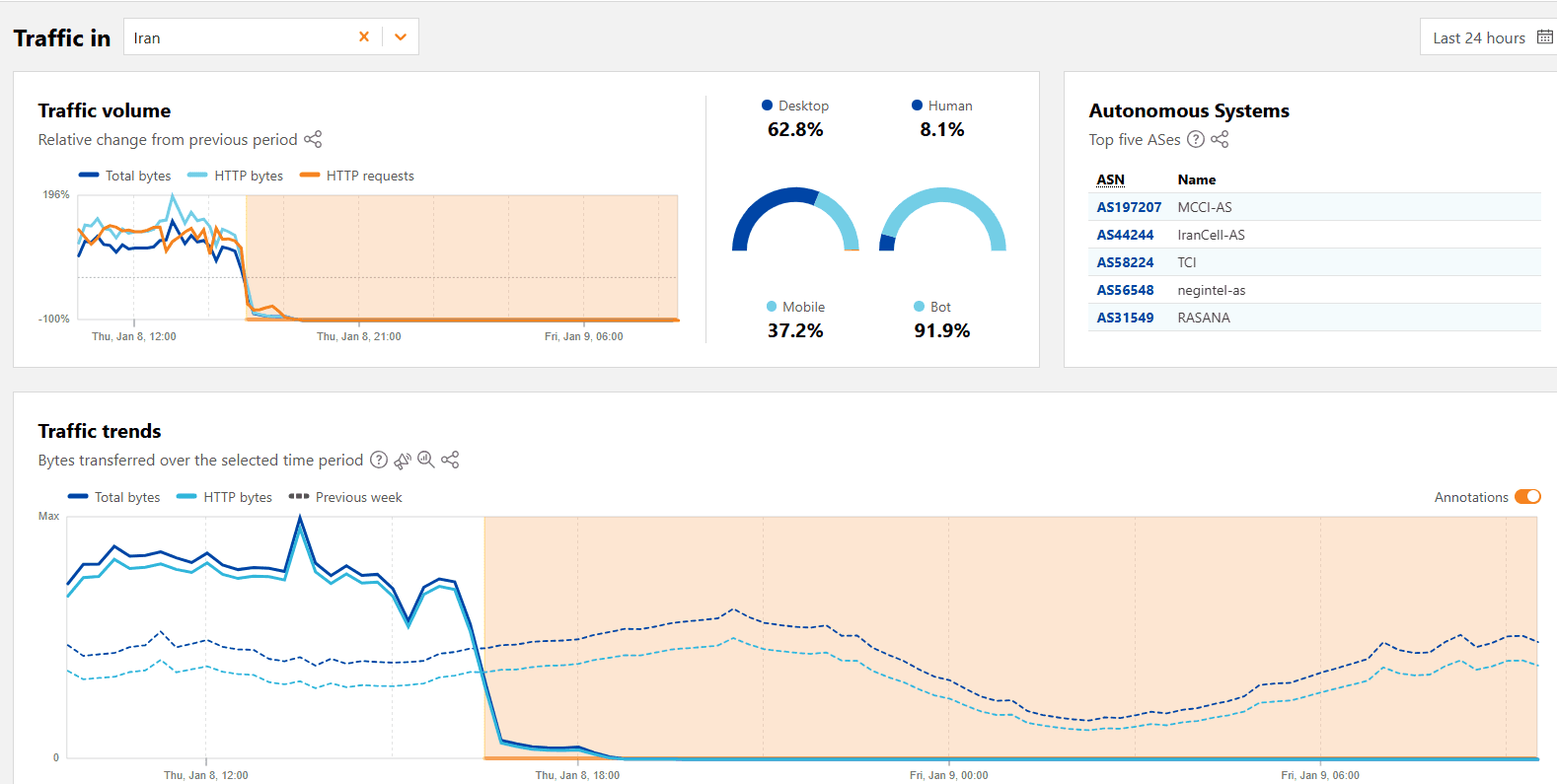
Iran Implements Nationwide Internet Shutdown Amid Deadly Protests: Analysis of Cybersecurity Implications
Iran has implemented a nationwide internet shutdown in response to widespread protests against economic conditions and government policies. This action, confirmed by multiple sources, represents a significant escalation in the use of digital control measures to suppress dissent. While technical details regarding the implementation of this shutdown—such as specific protocols or infrastructure targeted—are not disclosed in the source material, the impact is clear: a complete disruption of online communications nationwide. From a cybersecurity perspective, this event underscores the growing trend of nation-state actors leveraging technical means to control information flow during periods of civil unrest. The lack of internet access not only hampers the ability of protesters to organize and share information but also disrupts business operations, financial transactions, and emergency communications. This incident highlights the critical importance of resilient communication strategies for organizations operating in regions prone to such disruptions. Furthermore, it serves as a stark reminder of the dual-use nature of network management technologies, which can be repurposed for censorship and repression. Cybersecurity professionals should note the increasing frequency of internet shutdowns as a tool of political control and consider the implications for data security, operational continuity, and human rights in digital spaces. However, without specific technical details on the methods employed, a deeper technical analysis is not feasible at this time.