
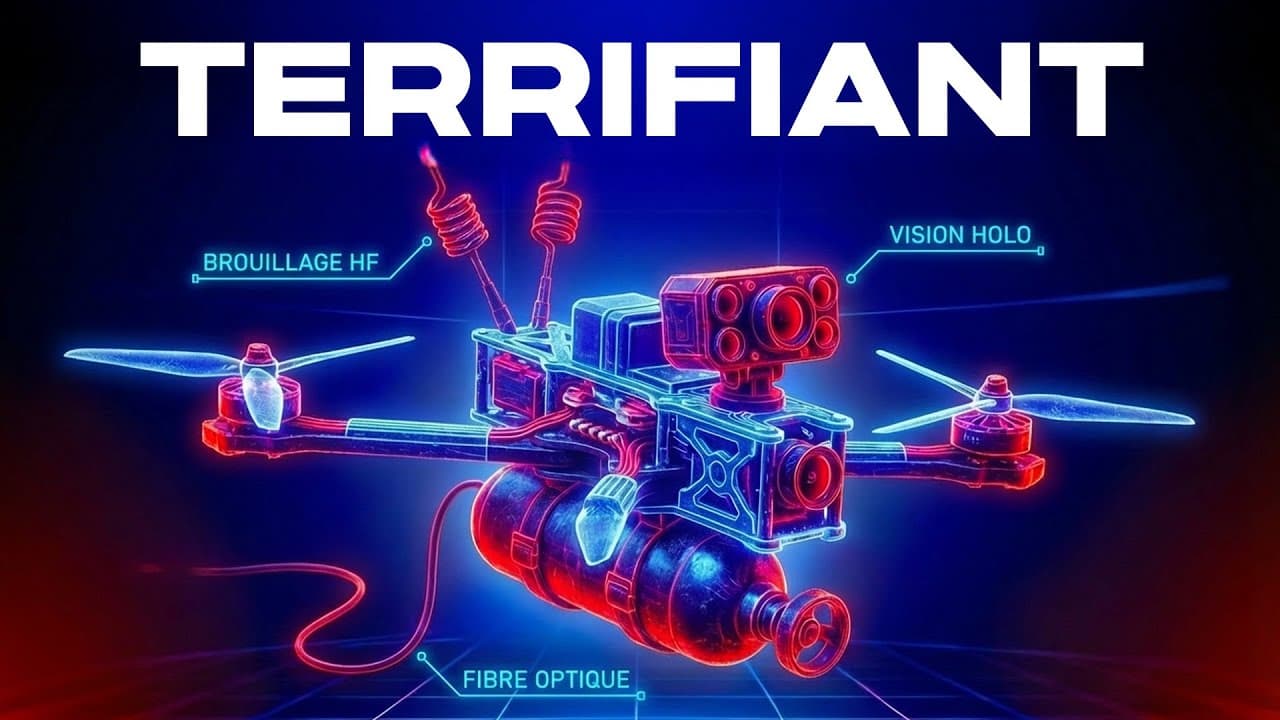
The Evolution and Impact of Drones in Modern Conflicts: The Case of Ukraine
The topic focuses on the evolution and impact of drones in modern conflicts, illustrated by their use in Ukraine. Initially developed for military surveillance in the 1960s-1970s, drones became more accessible in the 2010s with consumer models like those from Parrot or DJI. In Ukraine, production reached 4 million units in 2024, often assembled by volunteers or retirees. Tethered drones, connected by fiber optics over distances up to 40 km, help avoid jamming and ensure total discretion. Electronic warfare techniques include GPS jamming, signal spoofing, and drone hacking, with documented cases of Russian hypersonic missiles (such as the Kinzhal) being disintegrated mid-flight. Drones are also used for persistent surveillance (via captive systems like ISTER), event protection, and telemedicine. Anti-drone defenses include barbed wires to sever fiber optic cables. Mass production and rapid innovation in Ukraine rely on open-source software like ArduPilot and civilian components, often sourced from China.