
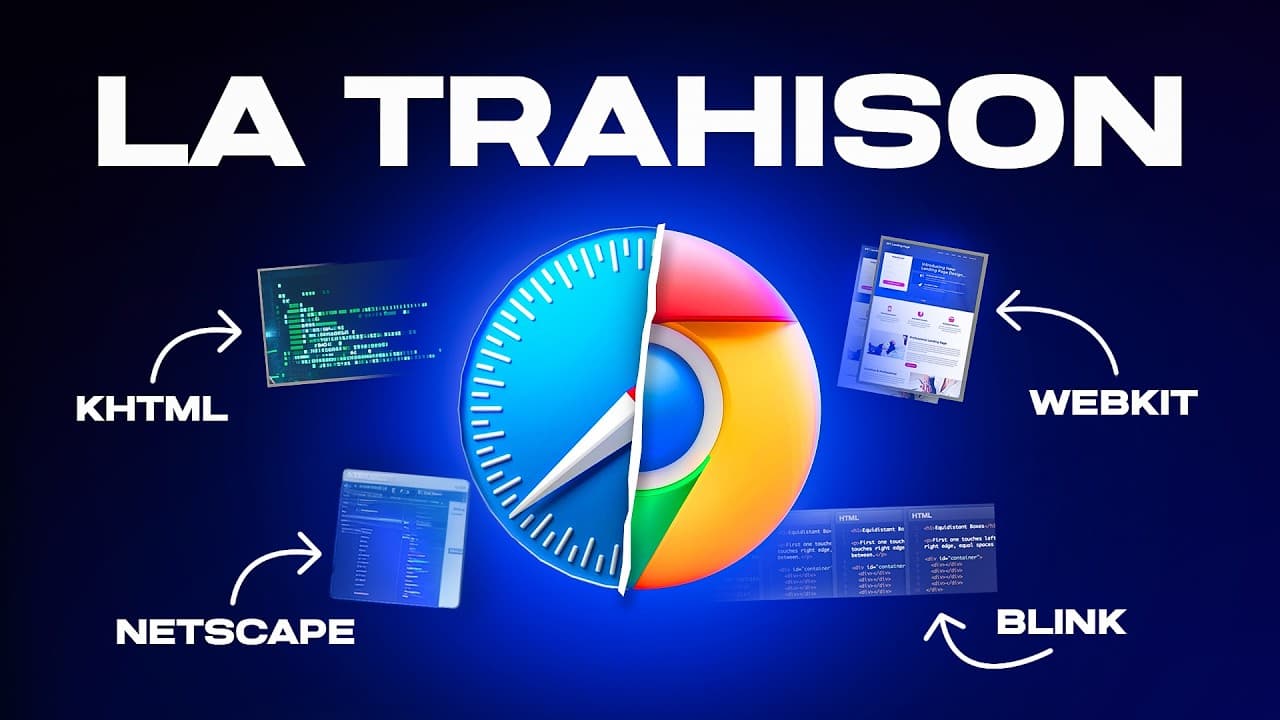
Evolution of Web Browsers: From KHTML to Chrome and Beyond
The video begins with a discussion on the evolution of web browsers, particularly Chrome and Safari, and their unlikely common ancestor, KHTML. This volunteer project, developed by a handful of enthusiasts, played a crucial role in the history of modern browsers. The story of these browsers is compared to an episode of Game of Thrones, with betrayals and code forks by giants like Apple and Google. One of the first browsers to emerge was Netscape, which revolutionized digital culture in the 90s. Netscape was created by the same individual who developed Mosaic, another pioneering browser. Netscape became a revolution, popularizing URLs and making the Internet accessible to the general public. However, Netscape eventually lost its dominant position to Microsoft's Internet Explorer, which was free and better integrated with Windows. Facing this competition, Netscape decided to make its source code open source, a novel decision at the time. This led to the creation of the Mozilla Foundation and the development of Firefox. Meanwhile, another open-source project, KHTML, was developed for the Konqueror browser in the KDE environment on Linux. Apple then used KHTML as the basis for creating Safari, modifying and improving it in secret, which caused frustrations among the volunteer contributors to KHTML. Google, which had initially collaborated with Mozilla on Firefox, decided to create its own browser, Chrome. They used WebKit, the rendering engine developed by Apple for Safari, as the basis for Chrome. This decision was driven by Google's need to control the entire web stack to improve the performance of its own services. Chrome quickly gained popularity due to its performance and a massive advertising campaign. The video also explores the strategic implications of web browsers. For companies like Google and Apple, having their own browser is crucial as it serves as a gateway to their other products and services. The diversity of rendering engines is essential for the health of the web, as it allows for the improvement of technologies and ensures optimal compatibility and security. Finally, the video discusses future projects like Servo and LadyBird, which aim to create new rendering engines using modern programming languages like Rust and Swift. These projects seek to address the security and performance issues inherent in current browsers. In conclusion, the video offers a fascinating overview of the evolution of web browsers, the technical challenges, and the power dynamics between major tech companies. It highlights the importance of rendering engine diversity for the future of the web and the ongoing efforts to improve browser security and performance.