
Early Computers: A Deep Dive into the PDP-1 and Its Legacy
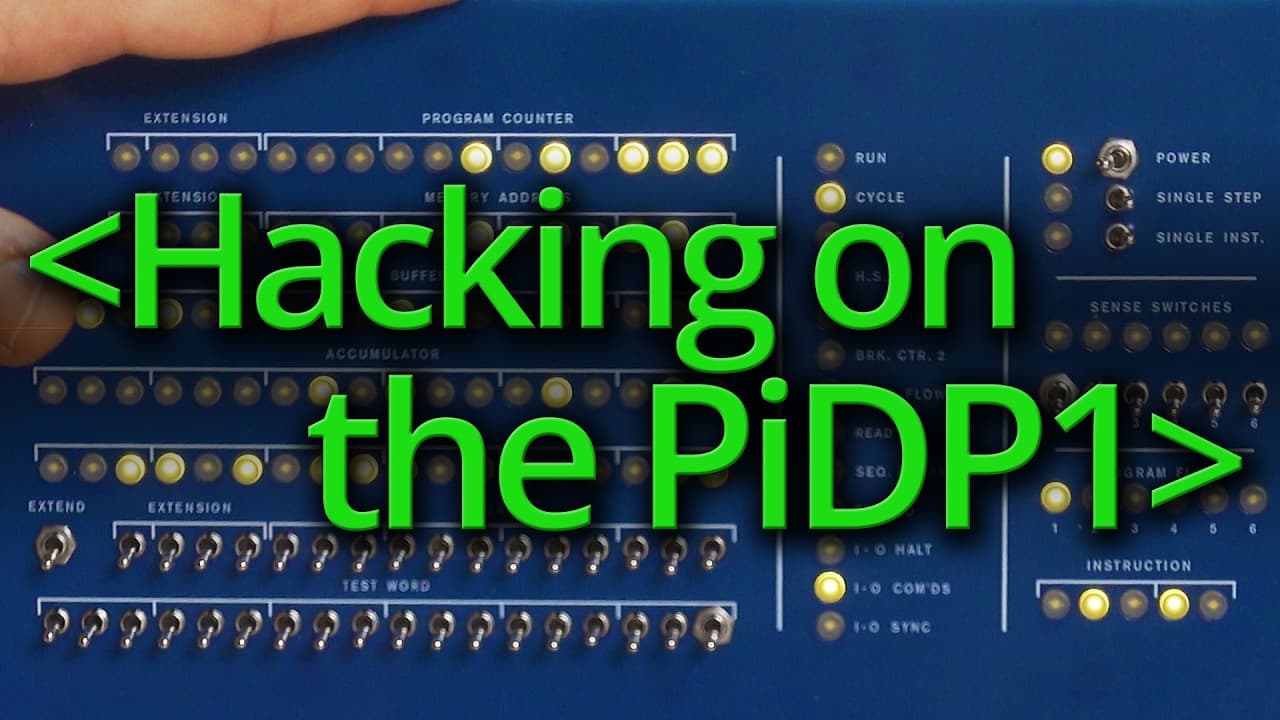
The video explores the history and technical details of early computers, focusing on the PDP-1 (Programmed Data Processor-1) designed by Digital Equipment Corporation (DEC) in 1959, with around 50 units sold. The PDP-1 was an 18-bit machine with 4 kilowords of memory, serving as a precursor to later models like the PDP-4, PDP-7 (where Unix was developed in 1969), and the 12-bit PDP-8, used for process control and lab equipment. The discussion highlights the evolution of word sizes (18-bit, 36-bit for PDP-6/10) and the introduction of byte addressing with the PDP-11 in 1969, which unified DEC’s architectures. The video demonstrates programming the PDP-1 via its front panel, using octal input and a debugger called DDT, to run Marvin Minsky’s circle-drawing algorithm and the Minskytron, a chaotic oscillator demo controlled by switches. It also covers the use of paper tape for program storage and the interactive nature of early computing, including time-sharing and symbolic AI research from the 1960s. Predecessors like the TX-0 and Whirlwind (1950) are mentioned, emphasizing their role in core memory and real-time computing. The PDP-1’s simplicity and visibility of internal states via front-panel lights are noted as key features for debugging.