
Cybersecurity Analyst Uses AI for Autonomous War Games and CTF Challenges
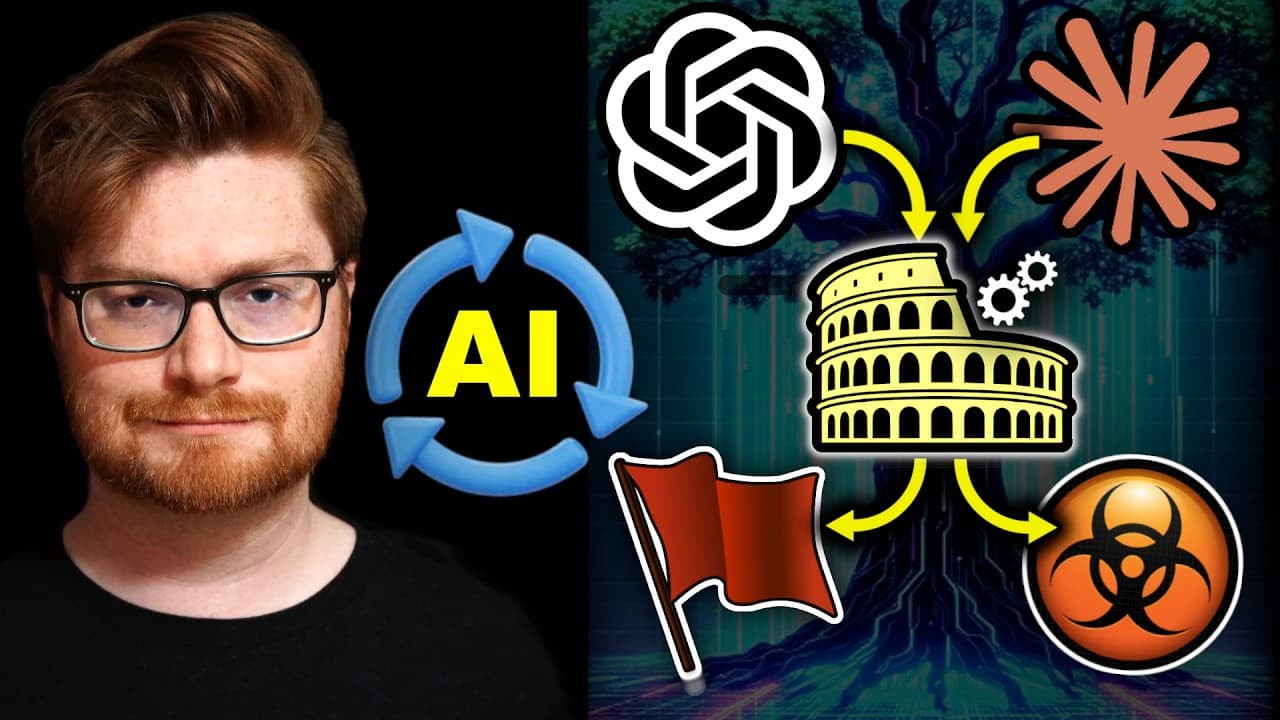
🎬 The video demonstrates how a cybersecurity analyst uses AI, specifically GPT-5.5 in "low reasoning" or "fast mode," to autonomously solve cybersecurity war games and capture-the-flag (CTF) challenges in a personal home lab. The setup includes a dedicated Linux Mint device (GPD Pocket 2) for running AI tasks, accessed remotely via VS Code with extensions like Codeex and Remote-SSH, while avoiding direct execution on the analyst’s main Windows desktop. The AI operates within a structured workspace combining an Obsidian vault, GitHub repository, and self-hosted N8N workflows to manage deterministic and non-deterministic tasks, including scheduled operations and integrations with tools like Slack or Gmail. For security research, the AI leverages Ludus, a Proxmox-based cyber range, to spin up virtual machines (e.g., Kali Linux, FlareVM) and autonomously solve challenges from platforms like OverTheWire, TryHackMe, and PicoCTF, generating detailed write-ups with screenshots and terminal transcripts. The analyst highlights experimental features like Codeex Goals, which enable infinite autonomous execution until objectives are met, and demonstrates real-time progress via Slack notifications and a custom web-based control dashboard. While the system successfully solved over 100 war game levels and registered for live CTFs (e.g., TJCTF), it remains a work-in-progress, with ongoing refinements to workflows and reporting.