
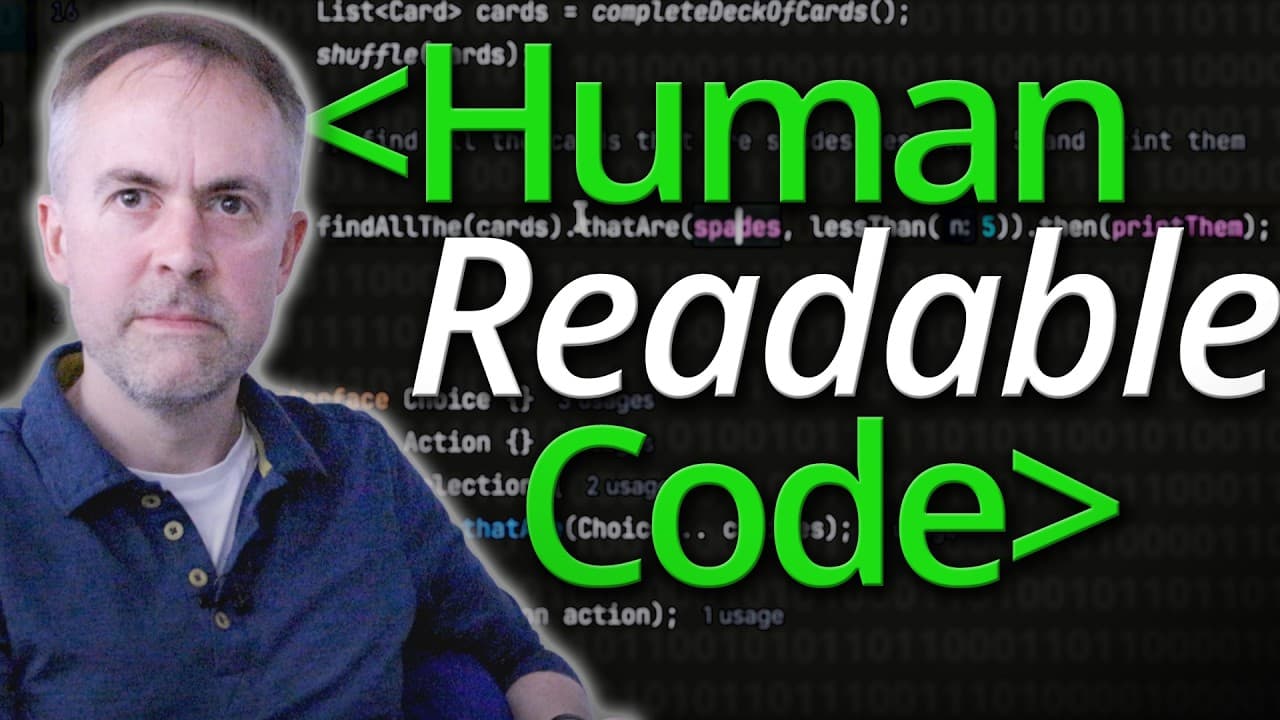
Computerphile Video Explores Writing Human-Readable Code
The video from Computerphile explores writing human-readable code by prioritizing domain-specific clarity over traditional programming constructs, using a deck of cards as an example. The discussion focuses on creating a "fluent API" in Java where code mimics natural language, allowing non-programmers to validate logic (e.g., "find all the cards that are spades less than five and print them"). Techniques demonstrated include defining custom interfaces (e.g., Choice, Action, Selection) and method chaining to structure code as readable sentences, while abstracting underlying "plumbing" (e.g., null checks, loops) into reusable components. The approach emphasizes collaborative terminology development between developers and domain experts to avoid miscommunication, with upfront effort justified for frequently modified systems or test cases. While the example uses Java, the philosophy—designing code from the desired human-readable output rather than bottom-up—is presented as adaptable to other languages like Python or JavaScript. The video concludes that such readability is particularly valuable for tests, where stakeholders can verify correctness without understanding implementation details.