
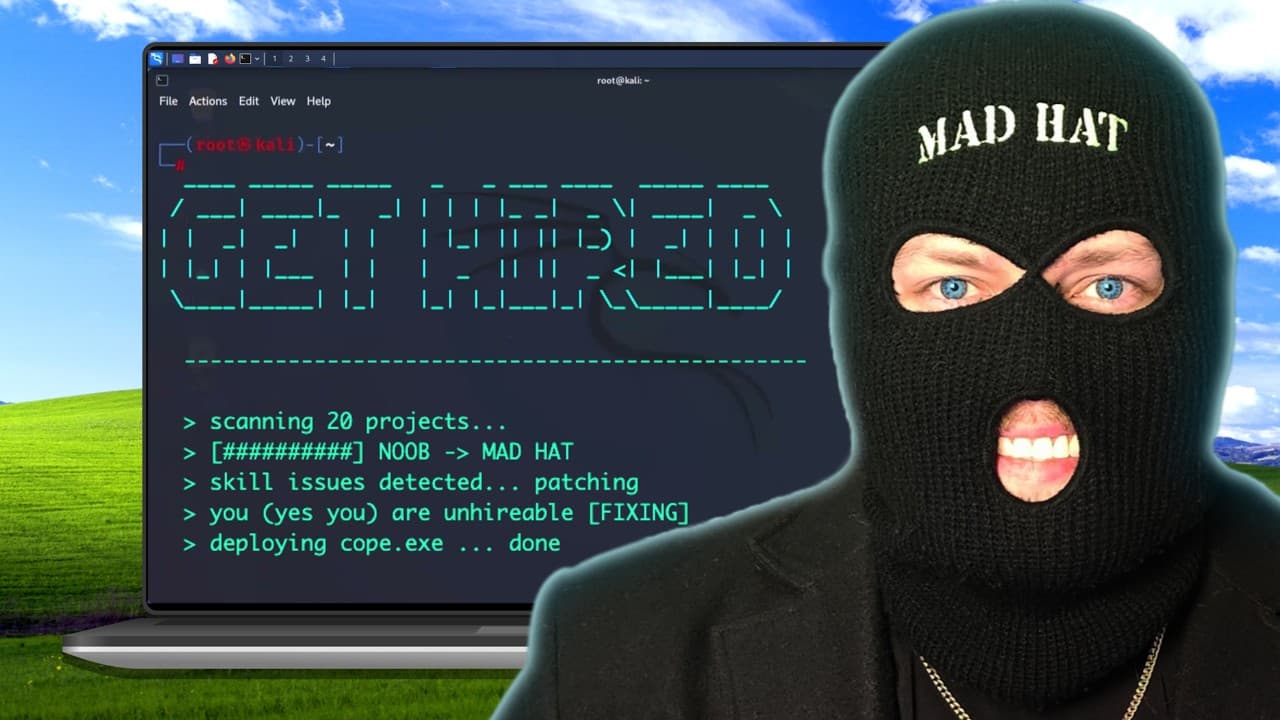
Top 20 Cybersecurity Projects Ranked by Difficulty and Hireability Impact
The video ranks 20 cybersecurity projects by difficulty (from 'noob' to 'madhat') and evaluates their impact on hireability, learning value, and perceived 'coolness' using a custom scoring system. Key projects include contributing a detection rule to Sigma HQ (difficulty 6/10, hireability 9/10), reverse engineering malware with Yara/Sigma rules (difficulty 10/10, hireability 10/10), and disclosing a real vulnerability for a CVE (hireability 10/10). Tools highlighted include Elastic/Sentinel for log analysis, Ghidra for malware reverse engineering, MISP for threat intel automation, and Azure/AWS for cloud misconfiguration hunting. The presenter, a former hiring manager, emphasizes projects that demonstrate investigation skills (e.g., documenting attack chains) or real-world application (e.g., LLM prompt injection testing, mandated by the EU AI Act). Projects like Active Directory attack/defend labs and OAuth consent phishing demos target enterprise-relevant skills, while automated security tooling (e.g., custom vulnerability scanners) proves engineering capability. Scores for hireability range from 1/10 (portfolio websites) to 10/10 (CVE disclosures), with 'coolness' often inversely correlated to practical value. The video concludes that unique, open-source contributions or hands-on detection engineering work stand out to employers.