
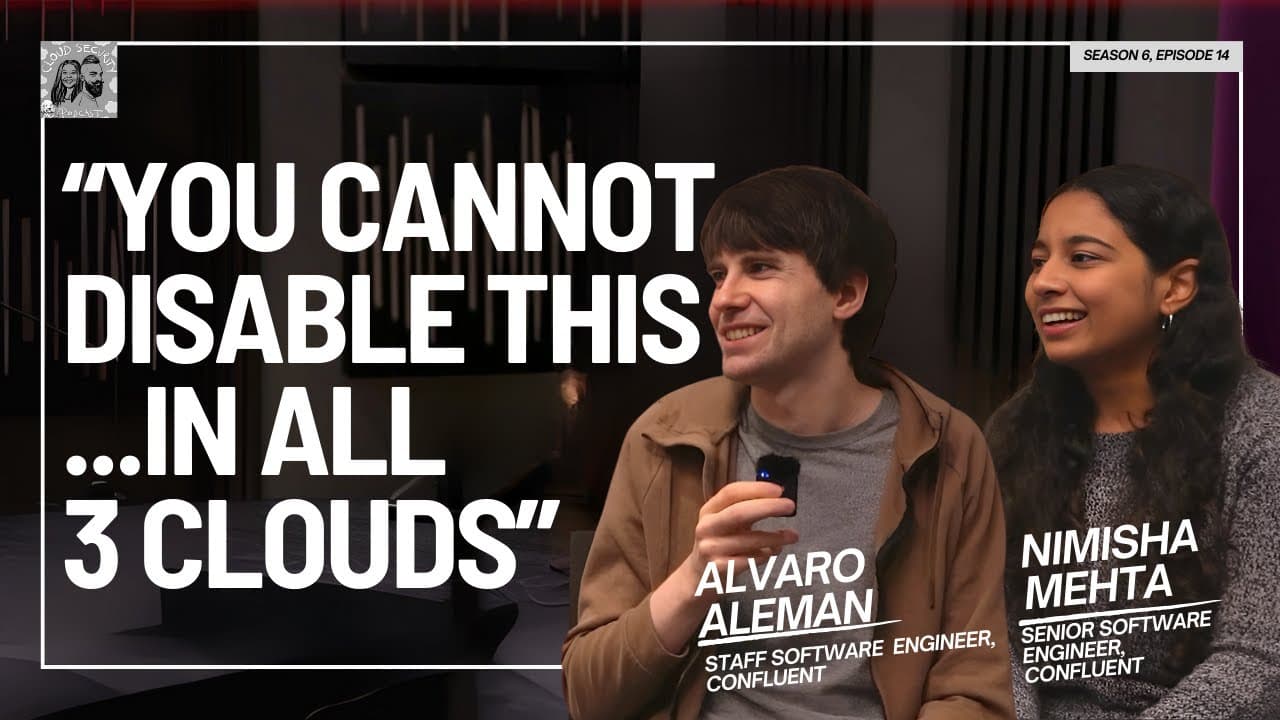
New Video from @CloudSecurityPodcast: Experts Discuss Multi-Cloud Kubernetes Security Challenges
In this new video from @CloudSecurityPodcast, experts Nisha and Alvaro from Confluent discuss the security challenges encountered while managing multi-cloud Kubernetes clusters on AWS, Azure, and GCP. They share their experiences and solutions using Cilium, an open-source network security project, to address specific security and network issues in complex environments. The podcast begins with an introduction of the guests, Nisha and Alvaro, who both work at Confluent on the Kubernetes platform. They explain that Confluent offers data streaming and stream processing products, available in managed versions on AWS, Azure, and GCP. This diversity of clouds requires complex infrastructure management, with cloud abstraction to simplify the internal experience. The main topic of the discussion is the migration to Cilium, a CNI (Container Network Interface) plugin that offers advanced network security features, such as DNS-based network policies and transparent encryption. The guests explain that the default CNI plugins of the three clouds did not meet their needs, leading them to adopt Cilium. On Azure, the migration to Cilium posed specific challenges, including the need to use the Enterprise version of Cilium for custom configuration and issues with migration in overlay mode. On GCP, cluster management was simpler, but the migration required maintaining the existing infrastructure, which was not possible with Cilium's managed options. On AWS, routing and internet connectivity issues were encountered due to network interface limitations and routing rules. The guests also share technical insights on the challenges faced, such as race conditions on Azure and routing issues on AWS. They explain how they resolved these issues using solutions like NodePort services and ensuring that IPtables rules are in the correct order. In terms of practical advice, Nisha and Alvaro recommend thoroughly reading the documentation, following discussions on GitHub, and collaborating with experts like those from Isovalent for in-depth technical support. They emphasize that some problems can only be discovered in production and that using Cilium's kube-proxy replacement feature can avoid certain types of issues. In conclusion, this discussion provides valuable insights into the challenges and solutions of network security in multi-cloud Kubernetes environments. The shared insights can be applied by other cloud security professionals to improve the management and security of their infrastructures. To learn more, watch the full video at the following address: https://www.youtube.com/watch?v=5sdn0fNnSDk