
Security Now 1090: AI's Transformative Role in Cybersecurity and Programming
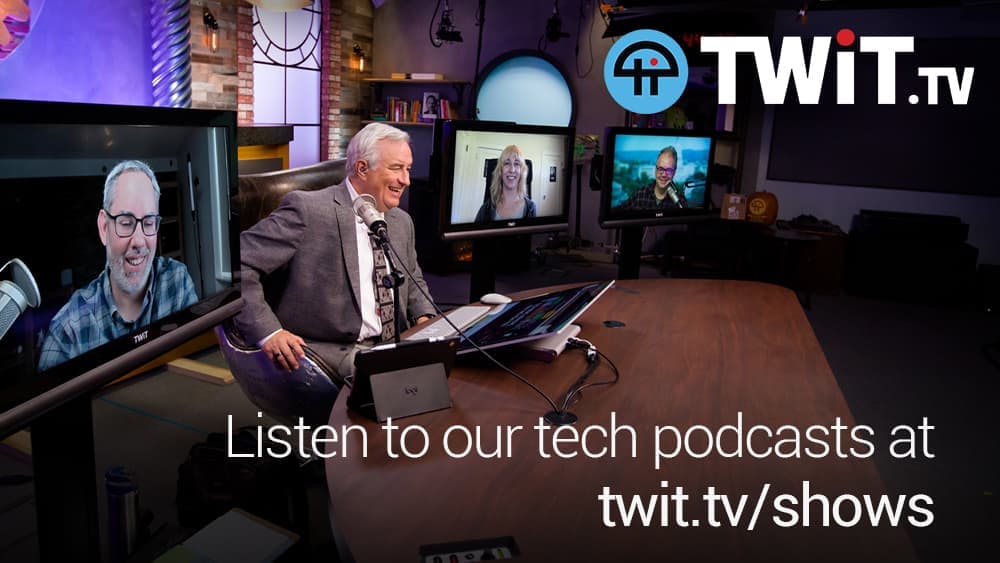
This episode of Security Now, recorded live at the Black Hat Conference in Las Vegas, explores the intersection of artificial intelligence and cybersecurity through a roundtable discussion with hosts Steve Gibson, Leo Laporte, Paul Thurrott, and Richard Campbell. The conversation centers on how AI is reshaping security practices, programming, and personal technology use, while also addressing concerns about its risks and limitations. The episode blends technical insights with practical examples, making it accessible to both experts and general audiences interested in the evolving role of AI in security. One of the central topics is the personal and professional adoption of AI tools, particularly in coding and problem-solving. Steve Gibson shares his cautious but growing reliance on AI, such as using Claude for technical guidance like setting up a mesh network, while resisting AI-generated code due to his preference for hands-on programming. Leo Laporte, in contrast, describes his full immersion in AI, using agent-based systems to develop software entirely through AI collaboration, including a Twit sales system with over 80,000 lines of code. The discussion highlights how AI lowers the barrier to entry for non-experts, as illustrated by a listener’s story about using AI to build custom apps for personal and professional needs, such as tracking automotive maintenance or managing a bowling league. The hosts emphasize that AI is democratizing programming, allowing hobbyists and small-scale developers to create tailored solutions without deep technical expertise. However, they also note the importance of maintaining human oversight, as AI’s probabilistic nature—where outcomes are based on likelihood rather than strict logic—can lead to unexpected results. The episode delves into the technical and ethical challenges of AI in security, including its potential to both strengthen and undermine cryptographic systems. The hosts discuss a recent development where AI cracked a reduced-round version of AES (Advanced Encryption Standard), a widely used encryption algorithm, though they clarify that this does not yet threaten real-world security due to the robust design of modern cryptographic protocols. The conversation also touches on the risks of AI analyzing AI, with concerns that recursive AI training could degrade performance or introduce vulnerabilities, a phenomenon referred to as 'slop.' The hosts debate the balance between open and closed AI models, with Leo Laporte arguing that open-weight models promote innovation and sovereignty, while companies like Anthropic advocate for controlled access to prevent misuse, such as the creation of bioweapons. The discussion underscores the need for responsible AI development, including local deployment options to protect sensitive data, as Leo mentions his plans to run AI models on NVIDIA Sparks hardware to maintain privacy and control over personal information like financial and health data. Another key theme is the evolving role of AI in cybersecurity operations, particularly its ability to parse and analyze large datasets like logs, which are often too complex for human review. Richard Campbell explains how AI excels in 'inside' applications, such as interpreting logs in tools like Home Assistant, where it can quickly identify patterns or anomalies that humans might miss. The hosts also explore the concept of AI agents working autonomously, with Leo describing his use of multiple AI agents collaborating in a secure, authenticated environment to manage projects. This agentic approach, where AI systems communicate and verify instructions, highlights the potential for AI to handle increasingly complex tasks while reducing human workload. However, the hosts caution that AI’s non-deterministic nature—where results are not guaranteed to be consistent—requires careful management, especially in security-sensitive contexts. The episode concludes with a broader reflection on the future of AI, including its integration into everyday technology and the potential for a bifurcated ecosystem where local AI nodes coexist with cloud-based models. Steve Gibson and Leo Laporte envision a future where individuals have personal AI servers at home, offering both privacy and customization, while Paul Thurrott and Richard Campbell discuss the practical applications of AI in software development, such as using frontier models for initial design before transitioning to specialized, local models. The hosts agree that AI is not a monolithic tool but a collection of capabilities that will increasingly blend into existing workflows, enhancing productivity and accessibility. The discussion leaves listeners with a sense of cautious optimism, acknowledging AI’s transformative potential while emphasizing the need for vigilance, ethical considerations, and human oversight in its deployment.