
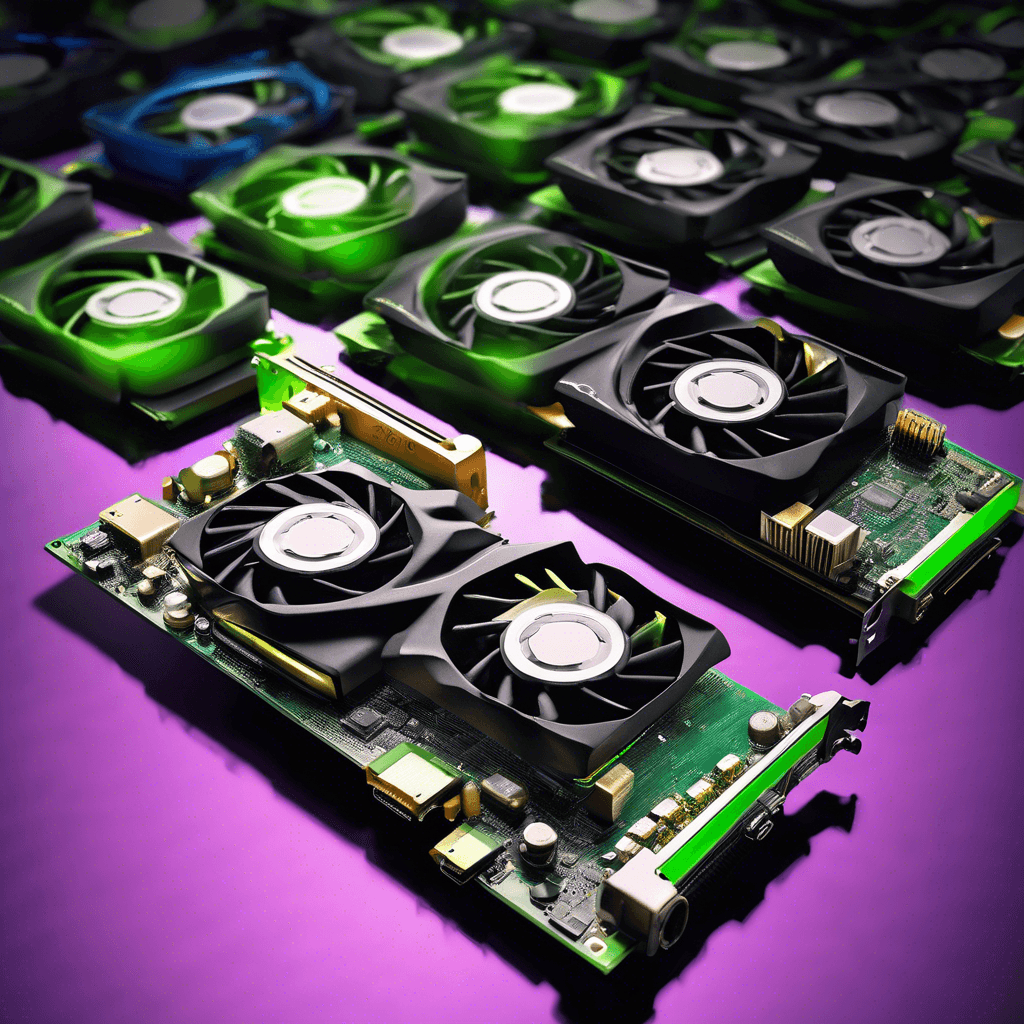
New Video from @Computerphile: The Evolution of Nvidia GPUs and CUDA
The video begins with a discussion on the evolution of Nvidia GPUs, initially designed for graphic rendering, and their transformation into general computing tools thanks to Ian Buck's initiative. Buck used GPUs for fluid mechanics simulations in his thesis, leading to the development of CUDA, a parallel computing and GPU programming platform. One of the early employees of CUDA explains how, in its early days, CUDA was barely programmable and evolved into a robust and versatile platform. CUDA allows combining parallel computing, ideal for tasks like image processing, with sequential computing, necessary for operations like file management or API calls. This approach, called "heterogeneous computation," optimizes resource usage by delegating appropriate tasks to the CPU or GPU. Initially, GPUs were primarily composed of fixed-function hardware, but today, about 90% of the hardware is programmable, allowing greater flexibility for various applications like graphic rendering, fluid mechanics, and artificial intelligence. The video highlights the similarities between algorithms used in different fields such as graphic rendering, fluid mechanics, and AI. These fields share similar algorithmic problems, allowing CUDA to adapt to a variety of applications. For example, graphic rendering algorithms are very similar to those used in fluid mechanics and AI, although each field has its own priorities and optimizations. CUDA has evolved to include a vast library of software and frameworks, covering areas such as image processing, AI, supercomputing, and data science. This evolution has allowed CUDA to become a complete platform that enables users to choose the best tools for their specific needs. For example, a Python programmer can use CUDA libraries to perform image processing tasks in parallel without worrying about the underlying hardware details. The video also addresses the issue of security, particularly in the context of "confidential computing." This technology allows the creation of secure and encrypted communication channels between the CPU and GPU, protecting sensitive data, such as AI models, from unauthorized access. This approach is crucial to ensure that AI models, which can cost millions of dollars to develop, are not stolen or compromised. Finally, the video discusses the upward compatibility of CUDA, emphasizing that programs written for CUDA 1.0 still work today. This compatibility is maintained through a strong commitment from Nvidia's hardware and software teams. The video concludes with a discussion on the illusion created by CUDA, which masks the underlying complexity of different hardware and operating systems, providing a unified interface for developers.