
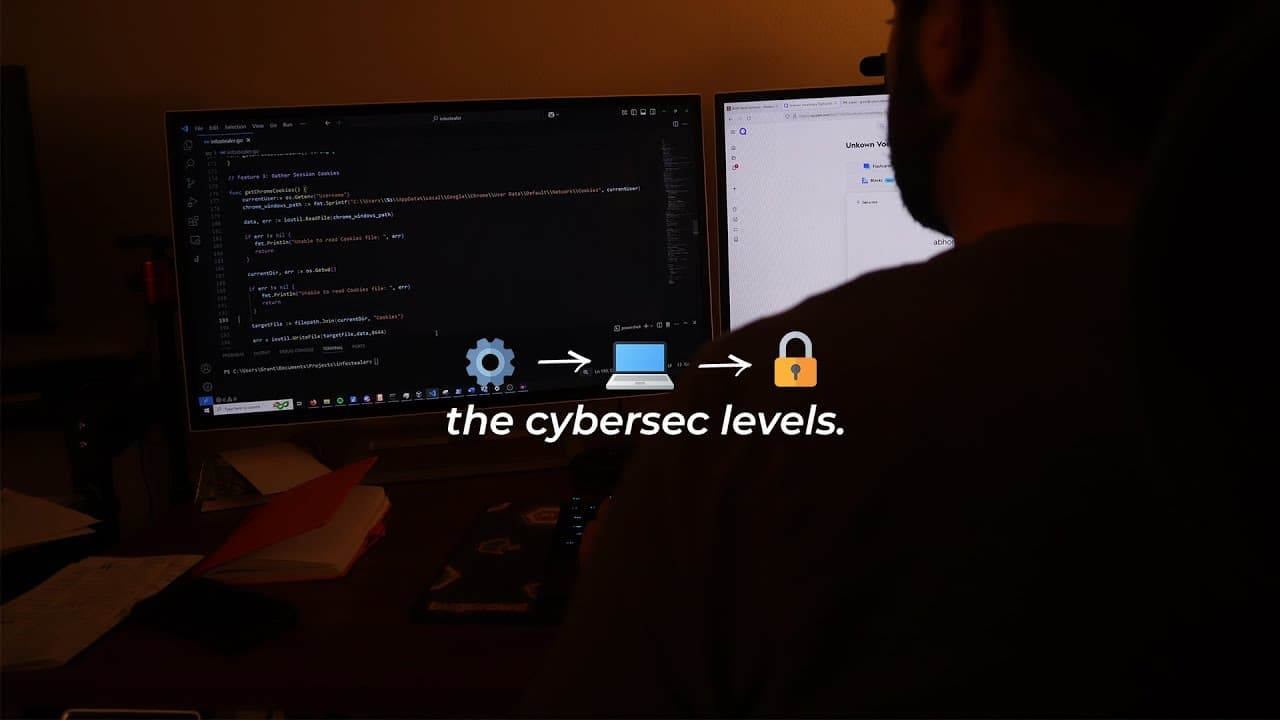
New Video from @collinsinfosec Explains Six Layers of Cybersecurity
The video from @collinsinfosec provides a detailed overview of the six layers of cybersecurity, using the analogy of an onion to illustrate the different strata of protection. Each layer plays a crucial role in defending against cyber threats, and understanding these layers is essential for a comprehensive and effective security approach. The first layer, often overlooked, is physical security. It deals with tangible threats such as holding a door open for someone, scanning QR codes, or looking over someone's shoulder while they work in a café. These actions can allow malicious individuals to access sensitive information or impersonate a user. To protect against these threats, it is crucial to adopt a layered approach, including user education, the use of RFID cards to restrict access, and screen protectors. The second layer is perimeter security, which acts as a general gatekeeper, filtering out noise and protecting the internal network from external threats. This includes tools such as network-based firewalls, intrusion prevention and detection systems, and VPNs. However, this layer has its limitations and can be bypassed by sophisticated attacks using impersonation techniques and legitimate protocols. The third layer, network security, focuses on managing access within the internal network. It involves controls and restrictions for users, devices, and communications. Identity and Access Management (IAM) is crucial here, as is protecting data at the network level, such as end-to-end encryption and verbose logging to monitor network activities. The fourth layer is endpoint security, which protects devices such as laptops, workstations, mobile devices, and IoT devices. Beyond traditional antivirus solutions, this layer includes advanced solutions such as Endpoint Detection and Response (EDR) and Extended Detection and Response (XDR). It is essential to implement patch and vulnerability management policies for these devices. The fifth layer concerns application and program security. It focuses on the software development lifecycle, integrating security practices from the beginning of the development process. This includes using secure programming languages, early bug detection, and establishing a patching schedule. The software supply chain is also a crucial aspect, with concepts such as the Software Bill of Materials (SBOM) and Software Composition Analysis (SCA). Finally, the sixth layer is centered on users and data. It involves managing and monitoring the data generated by applications, the network, and endpoints. Data standardization and enrichment are essential to reduce alert fatigue and improve visibility into user activities. In conclusion, this video offers a comprehensive overview of the different layers of cybersecurity, highlighting the importance of a layered approach for effective defense. Each layer presents viable career opportunities and unique challenges, requiring a deep understanding and rigorous implementation. To learn more, watch the full video at the following address: https://www.youtube.com/watch?v=W1-GP25koX8