
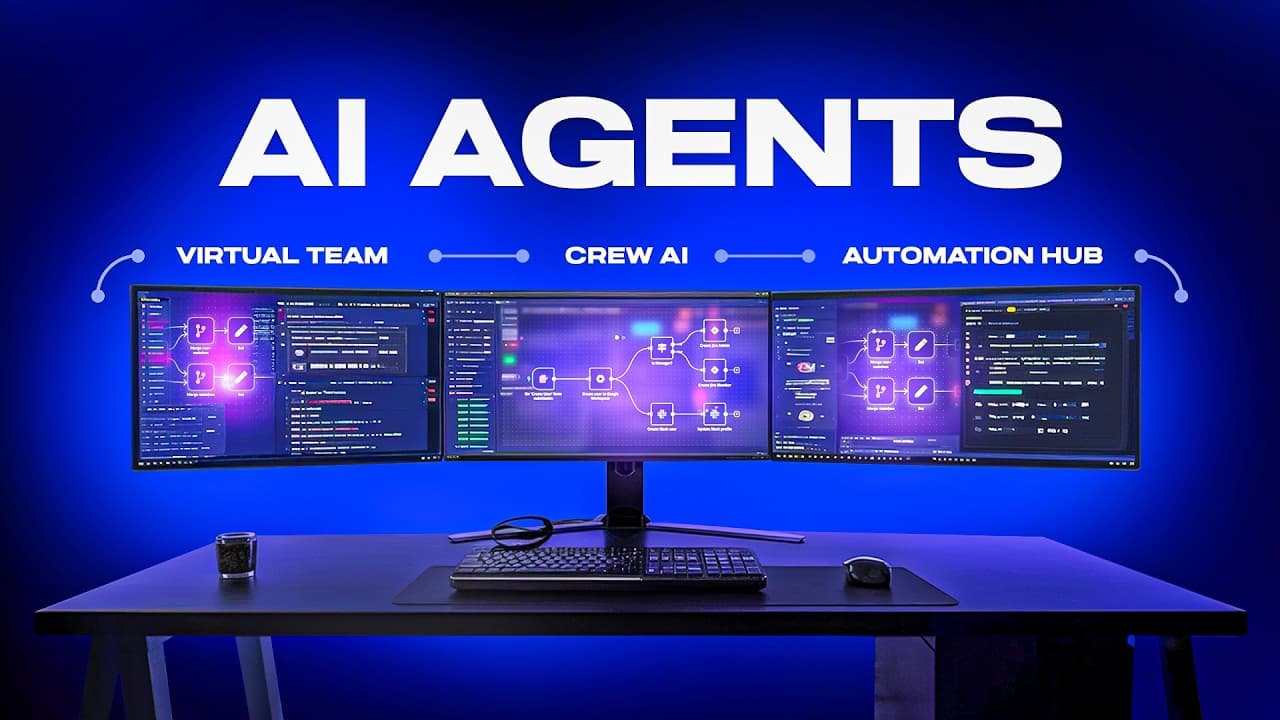
Employee Automates Work Using AI, Shares Impressive Journey
In this video, Sami, an employee of Clinitex, a cleaning company, shares his experience of automating his work using artificial intelligence (AI). He explains how he set up a team of virtual agents that work 24/7, completing about 50% of his work. Sami was not an AI expert initially, making his journey even more impressive and accessible for non-experts. Sami begins by describing his role at Clinitex, where he is responsible for developing software solutions for field needs, both for administrative staff and cleaning agents. He spends about 20% of his time exploring new technologies, 20 to 30% providing direct support, and the rest continuing or creating new projects. Before automation, a typical project like creating an intranet for cleaning agents could cost over 100,000 euros by going through a digital services company (ESN). The trigger for his automation journey was a cryptocurrency mining PC that was gathering dust. With a colleague, they used this hardware to experiment with AI models. Sami started using tools like Yam and Anything LLM, which allowed him to create workspaces for different users, ensuring data confidentiality. He avoided using services like ChatGPT due to concerns about the security of company data. Sami then moved on to more complex projects, using agent systems like Crew AI, where each agent has a specific task (developer, project manager, tester, etc.), supervised by a manager agent. He applied this method to automate the management of his company's Google Ads campaigns, using agents to search for keywords, check the content of competitor sites, and manage campaigns. Another notable project was the creation of an Android application to synchronize the company's phone directory with the Active Directory, saving thousands of euros per year. For this project, Sami used Cursor, a tool that facilitates software development by automating a large part of the coding work. Sami's most impressive project was the complete overhaul of the company's intranet using agents to transform mockups into functional code in just three days. He used a vision model to describe the screens and a prompt manager to divide tasks between different agents, minimizing errors. Finally, Sami shared a personal project: creating an application for his electric bike Super 73. Unsatisfied with the official application, he used agents to reverse engineer the bike's Bluetooth controller and develop a native application for iOS and Android. This application, sold for 10 euros, generated over 10,000 dollars in sales in two months. Sami concludes by emphasizing that, although AI may seem intimidating, it is a powerful tool for increasing productivity and reducing costs. He believes that AI will not replace developers but will accompany them in their future tasks.