
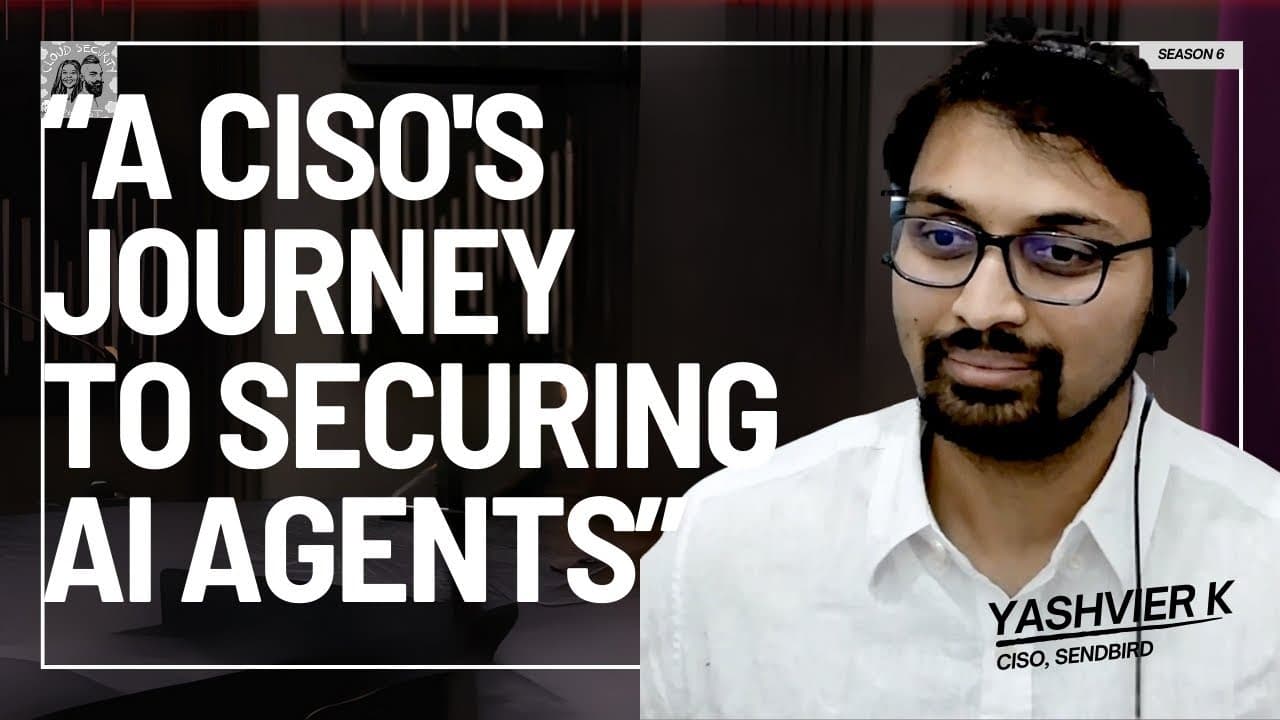
New Episode of Cloud Security Podcast Explores AI Security Challenges
In this captivating episode of the Cloud Security Podcast, Ashish welcomes Yash Kosaraju, Chief Information Security Officer (CISO) of Sendbird, a platform specializing in conversational agents for businesses. Their discussion delves into the challenges and transformations associated with integrating artificial intelligence (AI) into professional environments, particularly in terms of security. Here is a detailed summary of the key points discussed.
One of the main themes of this episode is the rapid transition of companies towards AI and the resulting security challenges. Sendbird, initially a mature company specializing in chat APIs for businesses, had to pivot towards AI to meet the new expectations of its customers. This change required a complete overhaul of their security practices. Yash explains that this transition introduced new types of risks and vulnerabilities, different from those encountered in traditional applications. For example, attack paths, data security models, and types of security issues have radically changed with the use of large language models (LLMs).
One of the major insights shared by Yash concerns common misconceptions about the security of AI tools. Many believe that because a tool like GitHub Copilot is supported by a large company like Microsoft, it is automatically secure. However, Yash emphasizes that terms and conditions vary depending on the models and features, and it is crucial to examine them carefully. For example, the differences between a beta version model and a generally available (GA) version model can have significant security implications.
Yash also addresses the challenges related to data management in the context of AI. It is essential to understand how AI providers use customer data. For example, is the data used to train generic models or is it protected by specific contracts? Additionally, it is important to know how to delete data once the contract is terminated, especially if it has been used to train models. These concerns are amplified by new vulnerabilities specific to LLMs, such as context injections, hallucinations, and leaks of sensitive data.
Another crucial point discussed is the redefinition of what constitutes a security incident in the context of AI. For example, how to classify a situation where an AI agent gives an incorrect or suboptimal response? This is not a traditional data breach, but it can still have financial or operational consequences for the company. Yash explains that Sendbird is actively working to define and detect these new types of incidents, in collaboration with their product teams.
To secure AI-based applications, Sendbird has adopted a multi-layered security approach. This approach does not rely on a single security control but on multiple layers of protection that reinforce each other. For example, to access tools like GitHub, employees must go through several checks: multi-factor authentication (MFA), device health verification, and integration with endpoint protection solutions like CrowdStrike. This multi-layered security philosophy aims to ensure that even if one layer of security fails, other measures are in place to protect the company.
Yash also shares practical advice for companies integrating AI into their operations. He recommends experimenting with AI while being mindful of the data shared. For example, using AI tools to automate tasks such as policy writing or synthesizing penetration test reports. However, he warns against using free services that might use user data for model training purposes. He also emphasizes the importance of a security culture within the company, encouraging employees to use approved tools and report any unauthorized use.
In conclusion, this episode provides an in-depth look at the challenges and opportunities related to AI security. Yash Kosaraju shares valuable insights into how Sendbird navigated this transition, emphasizing the importance of a multi-layered approach, continuous vigilance, and collaboration between security teams and other departments within the company. For those wishing to learn more about AI security and best practices, this episode is an invaluable resource.