
New Hak5 Video Explores Latest Cybersecurity Trends and Developments
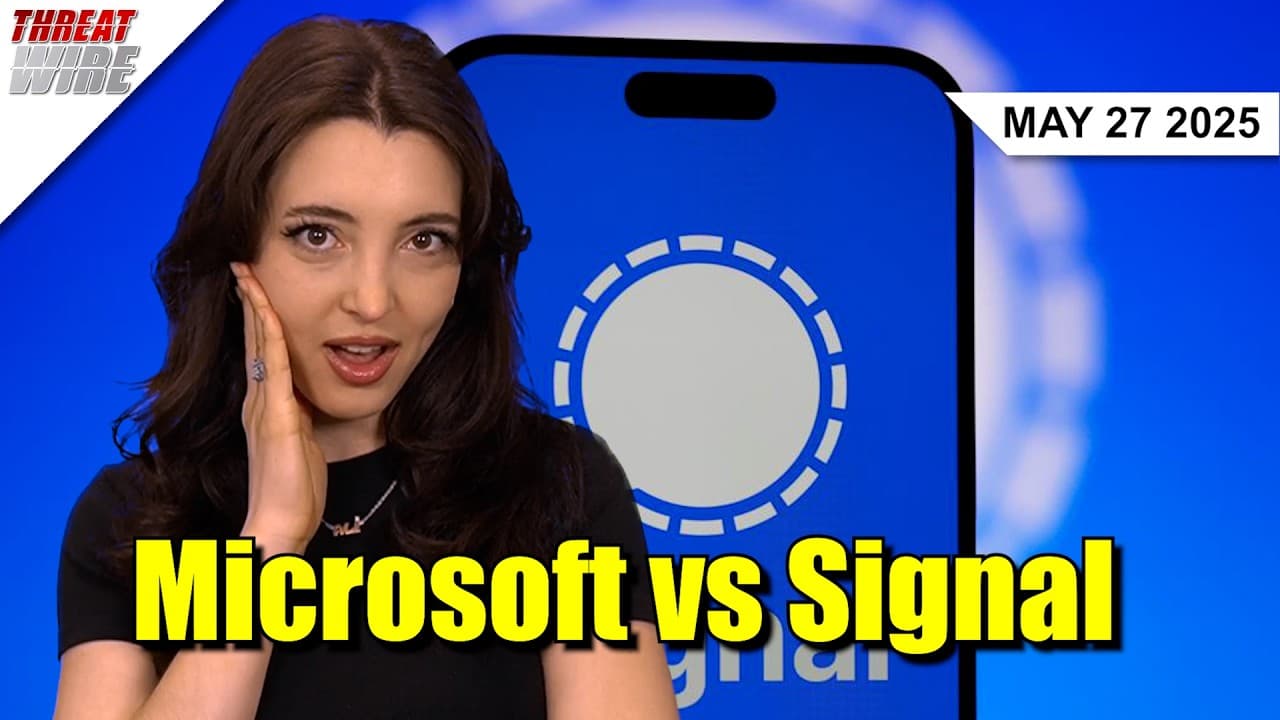
In this new video from the @hak5 channel, Alli Diamond introduces Threatwire, a show that explores the latest news and developments in cybersecurity. Several crucial topics are discussed, including the introduction of a new metric for assessing vulnerability exploitation, controversies surrounding Microsoft's Recall tool, and the discovery of a critical flaw in the Linux kernel through artificial intelligence. The first part of the video focuses on the new LEV (Likely Exploited Vulnerability) metric proposed by NIST and CISA. This metric aims to improve the efficiency and cost of vulnerability remediation efforts in enterprises. Unlike existing systems such as EPSS (Exploit Prediction Scoring System) and KEV (Known Exploited Vulnerabilities) lists, which have inaccuracies and gaps, the LEV metric is designed to be deterministic and reproducible. It uses specific dates and a weighting system to calculate the likelihood of a vulnerability being exploited. Although this metric has not yet been officially adopted, NIST plans to test it with industry partners to evaluate its performance. Next, the video addresses the controversies surrounding Microsoft's Recall tool, a native search system based on AI integrated into Windows. Recall takes and processes system screenshots to create a generic system-wide search. However, this feature has raised security concerns, particularly regarding the potential for unsecured storage of screenshots. In response, the messaging application Signal announced that it would prevent screenshots by default on Windows machines to protect user privacy. Signal uses a DRM (Digital Rights Management) flag to ensure that content does not appear in Recall or any other screenshot application. Another crucial point in the video is the discovery of a critical zero-day vulnerability in the Linux kernel by researcher Shaun Healin, with the help of OpenAI's language model 03. This vulnerability, identified as CVE-2025-37899, is a "use after free" flaw in the KSMBD module, which handles SMB3 protocol operations. This flaw potentially allows remote attackers to execute arbitrary code with kernel privileges. Healin used the 03 model to identify this flaw by analyzing the Linux kernel source code, marking a significant advancement in AI-assisted vulnerability research. Patches have been released to address this vulnerability, and users are strongly encouraged to update their systems. In conclusion, this video provides a comprehensive overview of the latest trends and developments in cybersecurity. It highlights the importance of new metrics for assessing vulnerabilities, the challenges posed by AI-based search tools, and advancements in vulnerability research through artificial intelligence. To learn more, watch the full video at: